
Introduction
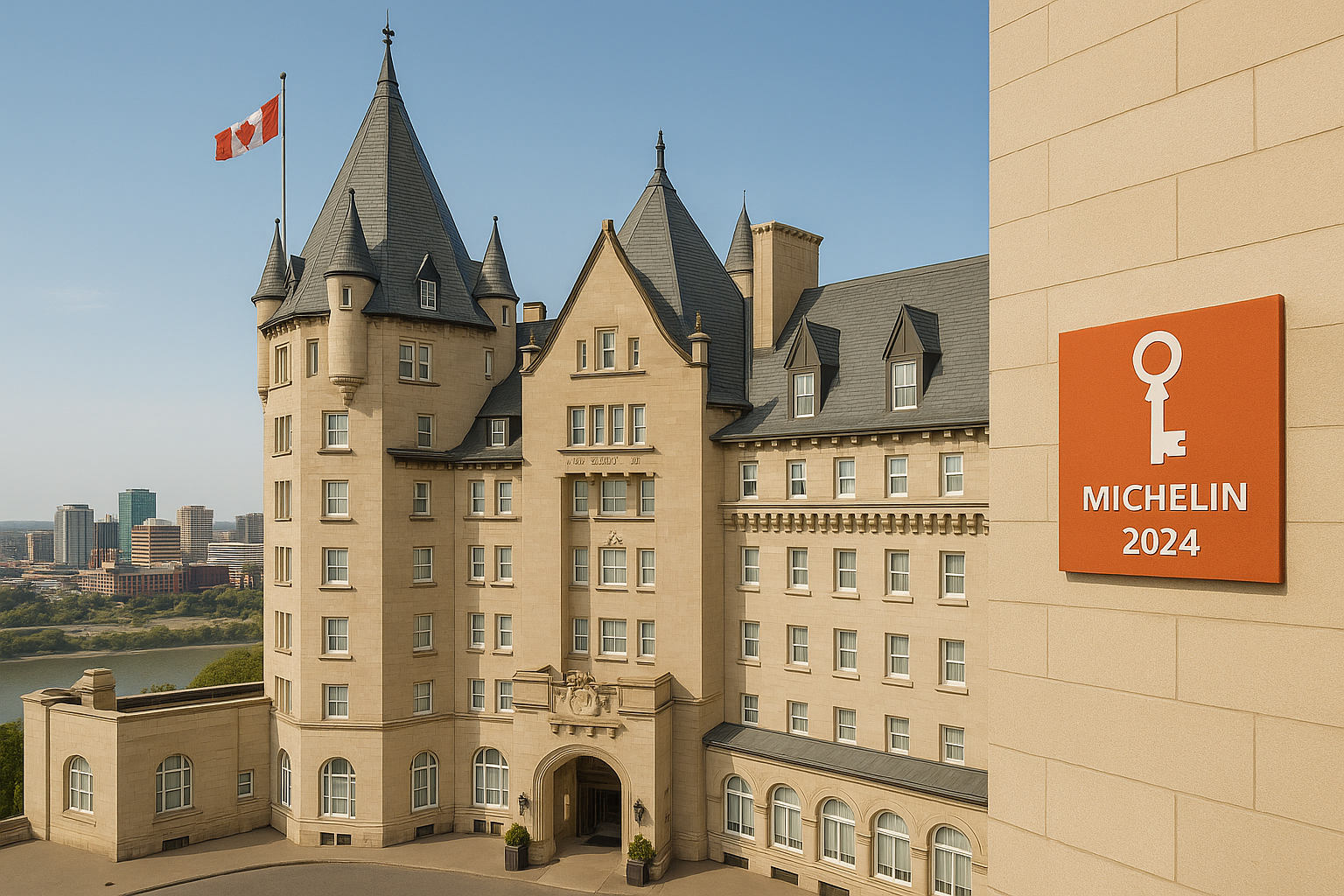
The venerable Fairmont Hotel Macdonald, often affectionately called the Hotel Mac by Edmontonians, has received a major international accolade: a single key from the Michelin Guide. This recognition marks the first time the hotel has been distinguished in this way by the world-renowned hospitality benchmark. The announcement underscores how a century-old Edmonton landmark has successfully bridged its historic past with today’s luxury-hospitality expectations.
Built in 1915 by the railway era-builders in the château style, Hotel Macdonald has long been one of Edmonton’s most iconic buildings. The hotel’s architecture, location overlooking the North Saskatchewan River Valley, and its deep roots in the city’s social and economic life have made it a fixture of Edmonton’s urban identity. For it now to appear in the Michelin Guide is a sign of how the city—and Canada’s hotel landscape more broadly—is gaining fresh global recognition.
What The Michelin Guide Says About The Hotel?
In its commentary, the Michelin Guide describes the Hotel Macdonald as offering a storybook French Renaissance castle standing by the banks of the North Saskatchewan River. What is inside, however, is a perfectly contemporary luxury hotel featuring handsome and well-equipped rooms and suites.
This dual identity—historic exterior, modern luxury interior—is at the heart of the hotel’s appeal. The hotel’s suites named for Winston Churchill, King Edward VIII, and Queen Elizabeth II, and its highly regarded afternoon-tea service, all reinforce its status among luxury travellers. The Michelin Guide’s recognition of the hotel is therefore not just about its past, but about how it has maintained contemporary relevance.
The hotel now joins a relatively small group of Canadian properties that hold Michelin keys. Canada currently has 38 hotels with Michelin keys, spanning a variety of styles and budgets. While some of the country’s other grand railway hotels, including other Fairmont properties, have already been included, the Hotel Macdonald is the first in Edmonton to receive this honour.
Significance For Edmonton And Alberta
For the city of Edmonton and for the province of Alberta, the Michelin key award is more than a bow on the hotel—it is a signal of elevation in the global hospitality map. The fact that the Hotel Macdonald now carries a Michelin key means the city’s travel and tourism offering is being noticed internationally.
The recognition is deeply personal for the hotel team and for the city. For more than a century, the hotel has welcomed travellers to Edmonton, offering experiences that celebrate the community’s warmth and spirit. These awards are a testament to the colleagues who make special happen every day, and to the guests who continue to choose the hotel as part of their journeys. The emphasis here is on local team efforts and guest choice—an acknowledgement that luxury hospitality is as much about human service as about grand architecture and opulent interiors.
For Alberta’s tourism sector, having a property in Edmonton recognised by Michelin may help shift perceptions. Often Calgary and the Rocky Mountain resorts have dominated travel narratives in Alberta; this helps place Edmonton more prominently. Moreover, when luxury travellers look globally for special stays, the presence of a Michelin-recognized hotel adds weight to Edmonton’s mix of culture, nature, and history.
Context: Michelin Keys And Canadian Hotel Landscape
Understanding the broader context helps explain why this moment matters. The Michelin Guide began in France more than a century ago, originally as a practical guide for motorists seeking service stations, maps, and lodging. Over time, it evolved to rate fine dining with stars and hotels with keys.
The hotel key ratings are tiered:
One key: A hotel that is a true gem with personality and standout features.
Two keys: Exceptional stay—unique in every way.
Three keys: The highest honour, reserved for those stays considered a destination for the trip of a lifetime.
In Canada, there are a range of hotels listed across those ratings; but recognition remains relatively selective. While the hotel key ratings cover much of the country, Michelin restaurant stars in Canada are still limited to three regions: Vancouver, the Greater Toronto Area, and parts of Québec. That fact underscores that while hotel recognition is broadening, the culinary-star landscape still has geographic gaps in Canada.
The Hotel Macdonald’s addition to the list is part of a continuing evolution of Canada’s hospitality sector under global quality frameworks. Luxury doesn’t have to be confined to mountain resorts or major metropolitan areas; it can flourish in historic properties in less-expected locations.
The Hotel’s Heritage And Current Offering
The Hotel Macdonald’s story is vivid: built in 1915 by the railways as a château-style grand hotel, it forms part of Canada’s legacy of railway hotels. The architectural style evokes a European castle set in the Canadian wilderness—a romantic expression of early twentieth-century luxury travel.
Over time, the hotel has kept its grandeur but also adapted to modern guest expectations. It offers contemporary luxury rooms and top-end suites. The hotel’s setting by the river valley gives it scenic appeal, and its reputation for services such as afternoon tea further enhances its draw. The combination of heritage charm and modern amenities is clearly one of the factors that attracted Michelin’s attention.
Another notable accolade for the hotel came via travel magazines: it was included in rankings of the top hotels in Western Canada, highlighting positive reputation among travellers. Given that these awards come directly from guest feedback, they further reinforce the hotel’s status.
Implications For Guests And The City
What does this mean for potential guests and for Edmonton as a destination? For travellers seeking high-end luxury stays in Canada beyond the familiar Vancouver or Toronto corridor, the Hotel Macdonald now offers an internationally-recognised benchmark. A one-key rating from Michelin implies that guests can expect service, design, and ambience that stand out—not just for local reputation, but in a global context.
Given the hotel’s location in Edmonton, guests may also explore a broader travel experience: the city’s river valley, cultural institutions, and urban revitalisation efforts. Staying at a hotel with historic character and modern luxury provides a dual experience: it is both a destination in itself and a gateway to exploring Edmonton.
For Edmonton’s hospitality ecosystem, the Michelin key may help drive attention and bookings, especially from luxury travellers who consult global guides. It may also elevate the city’s profile in luxury travel itineraries where previously attention might have focused on other Canadian cities or mountain resorts.
Challenges And Future Outlook
While the recognition is a positive milestone, maintaining and exceeding expectations is the next challenge. A Michelin key sets a benchmark; guests arriving with this recognition in mind may have heightened expectations around service consistency, design upkeep, culinary offerings, and overall guest experience.
For Edmonton and the province, to build further momentum the question will be: can additional hotels, restaurants, and hospitality experiences step up to the international standard? The Michelin Guide’s selective nature means that to become a destination of choice for luxury travellers, Edmonton will need a cluster of recognised offerings, not just a single hotel. That means restaurants striving for stars and hotels continuously innovating.
On the infrastructure side, the travel ecosystem including airlines, local transport, amenities, and city tourism branding will matter. A single hotel milestone raises the bar, but to capitalise on it, the city needs to integrate hospitality recognition into a broader travel and tourism strategy.
Looking ahead, if the Hotel Macdonald continues its upward trajectory, it could aim for a two-key rating in future years. That would require the hotel to deliver an exceptional stay truly unique in every way. Similarly, other properties in Edmonton might be encouraged to pursue recognition, eventually building a regional luxury hospitality cluster.
Conclusion
The awarding of a Michelin Guide key to the Fairmont Hotel Macdonald is both a proud moment for the hotel and a significant marker for Edmonton’s place in the luxury-hospitality world. It shows that heritage, service, and modern luxury can blend successfully outside the most expected markets.
For travellers, it signals that the Hotel Macdonald offers a stay that meets globally recognised standards. For Edmonton and Alberta, it offers a compelling story of growth in travel appeal and an opportunity to further enhance the city’s luxury travel reputation. As the hotel leverages this recognition, the broader hospitality landscape in Edmonton may well benefit, and travellers may find that one of Canada’s more under-appreciated cities is quietly rising as a destination of choice.