Introduction
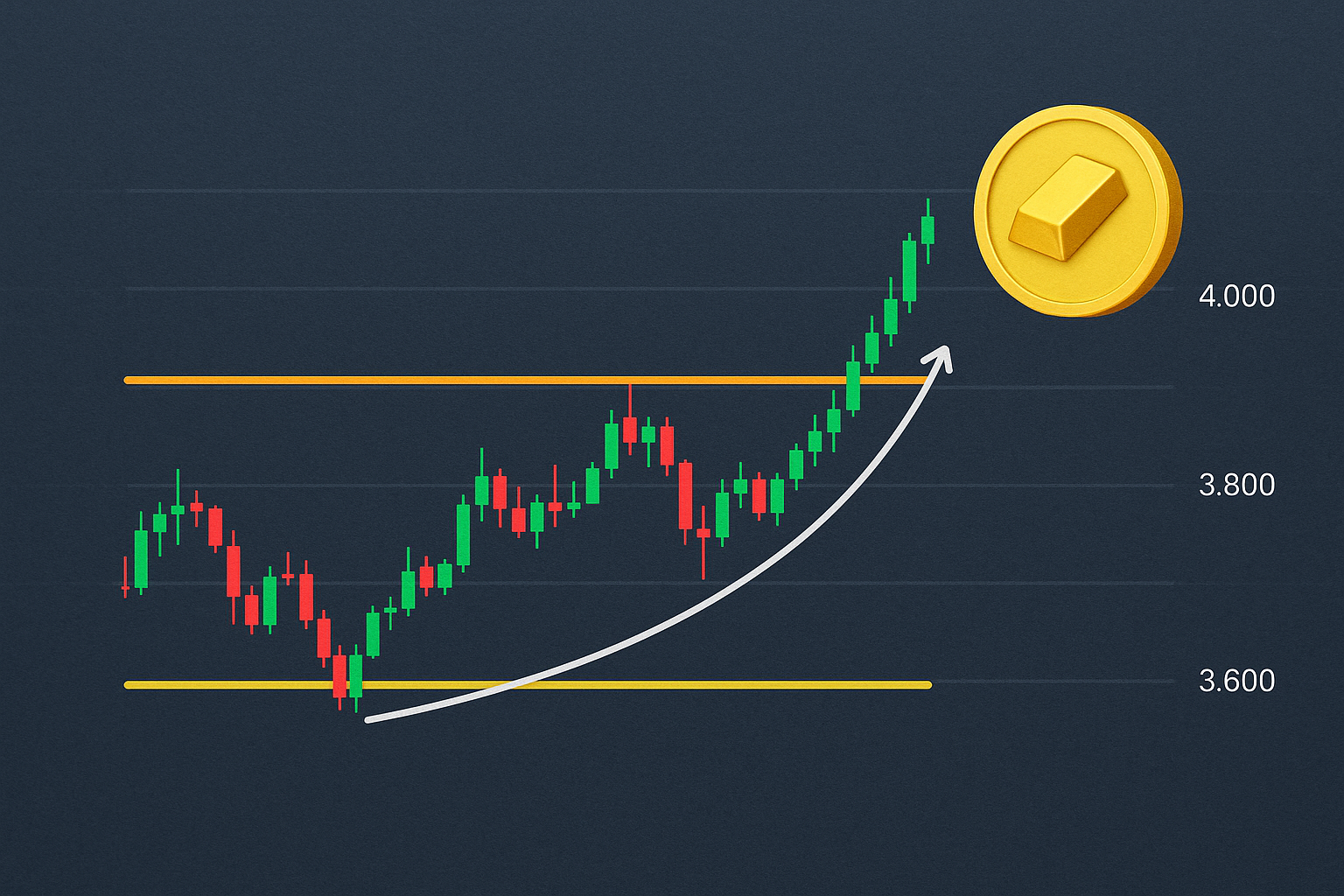
As of October 10, 2025, gold has continued its remarkable rally, trading above $4,000 per ounce. This surge represents a major milestone in the precious metal market and reflects sustained bullish momentum driven by a combination of geopolitical tensions, economic uncertainties, and shifting central bank policies. Over the past year, gold has gained more than 50 percent, and the two-year trend shows an increase exceeding 120 percent. Investors and analysts are noting this as one of the most significant bull markets in recent decades. The surge in gold prices highlights its role as a safe-haven asset in times of uncertainty and emphasizes its value as a hedge against currency fluctuations and inflation.
Gold’s current rally is not limited to spot prices. Gold-backed exchange-traded funds have seen record inflows, particularly in markets like India, the United States, and parts of Europe. The metal is also gaining attention from institutional investors and sovereign wealth funds, which have been diversifying their reserves to include more gold amid global economic unpredictability. Market analysts indicate that this trend may continue as global tensions and economic risks persist.
Key Factors Driving Gold’s Bullish Momentum
Geopolitical Instability
One of the primary factors behind gold’s current rally is ongoing geopolitical instability around the globe. Conflicts in the Middle East, including heightened tensions in Gaza, have increased demand for gold as a safe-haven asset. Investors often flock to precious metals when geopolitical events threaten market stability, and this time is no exception. Political uncertainties in major economies, such as leadership changes in Japan and France, as well as legislative gridlocks, have further reinforced gold’s appeal.
Market sentiment has been significantly influenced by these geopolitical risks. Traders are increasingly cautious, reallocating funds from equities and riskier assets to gold. The safe-haven demand has contributed to a sustained upward trend in prices and bolstered long-term investor confidence. Analysts note that even small developments in global conflicts can have a noticeable impact on gold’s short-term price movements, making it an especially reactive commodity during volatile periods.
Economic Uncertainty and Federal Reserve Policy
Economic uncertainty is another key driver of gold prices. In the United States, ongoing debates over fiscal policies, slow economic growth, and inflationary pressures have affected investor behavior. In addition, the Federal Reserve’s dovish stance, which includes anticipated interest rate cuts in the latter part of 2025, has weakened the U.S. dollar. A weaker dollar typically increases the appeal of gold because it makes the metal cheaper for foreign investors, driving higher demand.
The combination of potential rate cuts and economic uncertainty has created a favorable environment for gold. Traders have been closely monitoring statements from Fed officials, adjusting their positions in response to any indications of policy shifts. Analysts argue that even minor signals of economic slowdown or inflationary risks can lead to sustained buying pressure on gold, pushing prices higher in both the short and medium term.
Central Bank Purchases and Global Demand
Central bank activity has also played a critical role in supporting gold prices. In 2025, central banks have actively increased gold holdings as part of efforts to diversify foreign exchange reserves. This trend has reversed years of net sales and has been particularly strong in emerging markets, where gold is seen as a reliable hedge against currency volatility.
For example, India’s gold-backed ETFs recorded record inflows in September 2025, reaching an all-time high in assets under management. Other countries, including China, Russia, and several Middle Eastern nations, have similarly increased gold reserves, signaling a broader global trend of accumulation. Analysts suggest that this institutional demand is likely to sustain upward pressure on prices, especially if macroeconomic uncertainties continue to dominate global markets.
Technical Analysis: Key Levels For XAU/USD
Gold’s technical indicators provide additional insight into its current rally. As of October 10, 2025, spot gold is trading at approximately $3,978 per ounce, continuing to hover around the $4,000 psychological threshold. Technical analysis indicates that gold is in a strong bullish trend, with momentum indicators signaling further potential upside.
Support Levels
The immediate support levels for XAU/USD are crucial for traders aiming to manage risk. The first significant support is around $3,960, which has acted as a demand zone in recent trading sessions. A secondary support exists at $3,920, a previous resistance level that has now turned into support, reinforcing the market’s bullish sentiment. These levels are closely monitored by investors for indications of potential pullbacks or trend reversals.
Resistance Levels
On the upside, the first resistance level is around $4,075, coinciding with recent highs. A psychological barrier also exists at $4,100, which could act as a short-term cap on gains. Breaking above this level decisively may pave the way for further gains, potentially targeting $4,160 per ounce or higher, depending on market momentum and investor confidence.
Technical indicators such as the Relative Strength Index (RSI) are currently in overbought territory above 85, suggesting strong bullish sentiment but also signaling that a correction could occur. The Average Directional Index (ADX) above 50 further confirms the strength of the current trend. Traders are advised to monitor these levels closely to balance opportunities with potential risks.
Market Sentiment And Investor Outlook
Investor sentiment remains overwhelmingly bullish, supported by the combined effects of geopolitical tensions, economic uncertainty, and central bank activity. Gold’s role as a safe-haven asset is reinforced during periods of market volatility, and the current environment continues to favor sustained buying.
However, analysts caution that the market is not without risks. Profit-taking could trigger short-term corrections, particularly if geopolitical tensions ease or if the Federal Reserve alters its policy unexpectedly. Even in a bullish scenario, investors are advised to remain vigilant and use technical levels as guides for entry and exit points.
Market experts are forecasting continued strength for gold in the medium term, with potential price targets ranging between $4,100 and $4,200 per ounce if current conditions persist. Conversely, a drop below $3,983 could signal a short-term bearish reversal, highlighting the importance of monitoring key levels and market developments.
Conclusion
Gold’s surge past $4,000 per ounce underscores its critical role as both a safe-haven and an investment vehicle during uncertain times. The combination of geopolitical instability, economic concerns, and central bank activity has fueled this unprecedented rally. For traders and investors, the outlook remains positive, but vigilance is necessary to navigate potential corrections or shifts in market sentiment.
Monitoring technical levels, economic indicators, and geopolitical developments will remain essential for anyone participating in the gold market. While bullish momentum is strong, gold is inherently sensitive to a variety of global factors. Long-term investors can view current levels as a reflection of gold’s enduring value, whereas short-term traders may need to balance profit opportunities with risk management strategies.