Introduction
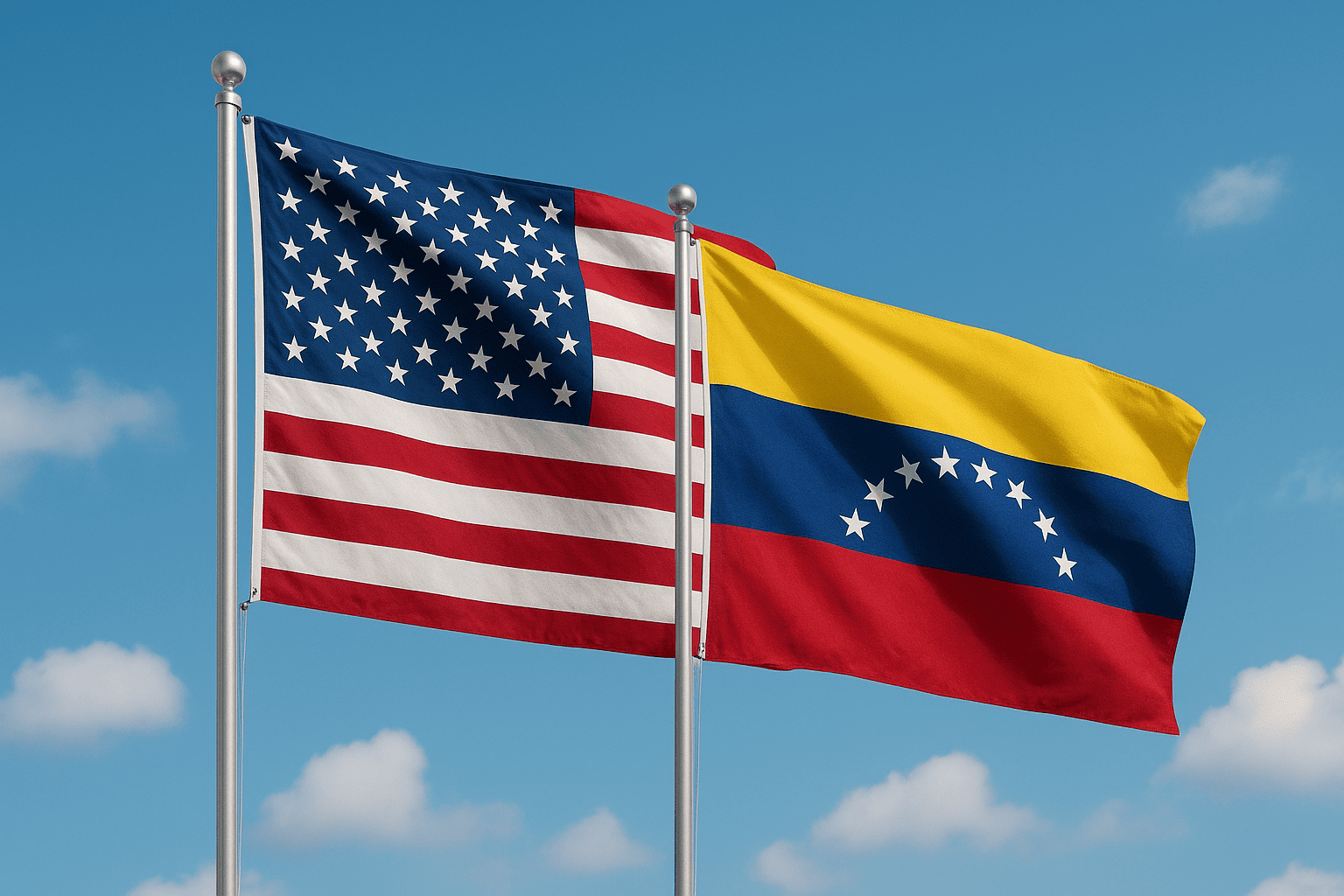
In November 2025, senior officials in the United States disclosed that Washington is preparing to initiate a new phase of operations related to Venezuela, marking a significant escalation in a long-running standoff with the government of President Nicolás Maduro. The development reflects growing frustration within the U.S. administration over Venezuela’s alleged role in international narcotics trafficking, as well as broader geopolitical calculations in the Western Hemisphere. While officials emphasized that the initial steps are likely to be covert in nature, the presence of extensive U.S. military assets in the Caribbean has fueled speculation that Washington is keeping far more aggressive options on the table.
Strategic Motivations Behind The Escalation
The United States has framed its renewed operations primarily as a national security and counter-narcotics effort. U.S. officials argue that drug trafficking routes originating in or passing through Venezuela contribute directly to the flow of illegal substances into North America, exacerbating public health and security crises at home. Central to this strategy has been the classification of certain Venezuelan networks as terrorist-linked criminal organizations, a move that significantly expands the legal authority available to U.S. agencies. By redefining the threat in this way, Washington has created a framework that allows for broader operational flexibility, including intelligence operations, financial disruption, and potentially direct action against individuals and infrastructure linked to these networks.
However, analysts and critics point out that the scale of U.S. preparations appears disproportionate to traditional counter-drug missions. The deployment of advanced naval and air assets, along with elite military units, suggests that Washington is also considering scenarios that go beyond interdiction. For some policymakers, weakening or destabilizing the Maduro government is viewed as a means to curb criminal activity, restore democratic governance, and reassert U.S. influence in a region where rival powers have expanded their presence in recent years.
Military Buildup And Regional Presence
The groundwork for this new phase was laid through a substantial military buildup across the Caribbean basin. Throughout 2025, the United States gradually increased surveillance flights, naval patrols, and joint exercises with regional partners. By November, this presence had expanded into one of the most significant U.S. military concentrations near Venezuela in decades. Aircraft carriers, guided missile destroyers, submarines, Marines, and sophisticated reconnaissance systems have been positioned to provide rapid response capability and sustained operational reach.
Official statements continue to emphasize that these forces are intended to disrupt trafficking routes before drugs reach U.S. shores. Yet the capabilities on display are equally suited for high-intensity conflict, intelligence dominance, and rapid strike operations. This dual-use posture has created uncertainty about Washington’s true intentions and heightened anxiety among neighboring states that fear being drawn into a wider confrontation.
Covert Operations And Strategic Ambiguity
According to U.S. officials, the first stage of the new operational phase is expected to involve covert actions. Such operations typically remain undisclosed, but they may include intelligence collection, cyber activities, financial tracking, and discreet support for opposition elements inside or outside Venezuela. The use of covert measures allows Washington to apply pressure while maintaining plausible deniability, reducing the immediate risk of open conflict.
Strategic ambiguity is a deliberate feature of this approach. By keeping details vague, the United States aims to unsettle adversaries, disrupt planning, and preserve flexibility. At the same time, this secrecy fuels speculation and mistrust, particularly in a region with a long history of foreign intervention. Observers note that covert operations can easily escalate if exposed or misinterpreted, potentially leading to retaliation or unintended clashes.
Response From The Venezuelan Government
President Nicolás Maduro has condemned the U.S. plans as an act of aggression and a violation of Venezuela’s sovereignty. His government has categorically denied allegations of leading or protecting international drug trafficking organizations, portraying the accusations as politically motivated. Caracas argues that Washington’s real objective is regime change and control over Venezuela’s vast natural resources, particularly its oil reserves.
In response to the perceived threat, the Venezuelan government has placed its armed forces on heightened alert and emphasized national defense readiness. Military exercises, civil defense drills, and public messaging campaigns have been used to project resilience and deter foreign intervention. Maduro has also called on supporters to prepare for what he describes as a prolonged struggle against external pressure, framing the situation as a defense of national independence.
International And Regional Reactions
The international response to the U.S. announcement has been mixed. Some governments in the region share concerns about organized crime and instability linked to Venezuela, and quietly support increased pressure on criminal networks. Others, however, have expressed alarm over the possibility of unilateral military action without broad international backing. Several countries and regional organizations have urged restraint, warning that escalation could destabilize the Caribbean and northern South America.
Human rights groups and legal experts have raised additional concerns, particularly regarding the potential use of force beyond clear self-defense. Past incidents involving maritime interdictions and targeted strikes have already generated controversy, and an expanded campaign risks further scrutiny. Calls for renewed diplomacy and multilateral engagement have grown louder as tensions rise.
Legal And Ethical Considerations
The prospect of expanded U.S. operations against Venezuela raises complex legal and ethical questions. Under international law, the use of force against another sovereign state is tightly constrained, typically requiring self-defense against an imminent threat or authorization through international institutions. Critics argue that labeling criminal networks as terrorist organizations does not automatically justify military action against a state, especially if civilian lives and infrastructure are at risk.
Ethical concerns also loom large. Venezuela’s population continues to face economic hardship, shortages, and migration pressures. Any escalation that disrupts essential services or economic activity could worsen the humanitarian situation. Advocacy groups warn that ordinary civilians are often the unintended victims of geopolitical confrontations, and they urge all parties to prioritize human rights and humanitarian access.
Implications For Regional Stability
The unfolding situation represents a critical test for regional stability in the Americas. A miscalculation by either side could trigger a chain reaction involving neighboring countries, armed groups, or external powers with strategic interests in Venezuela. The Caribbean, already grappling with economic and security challenges, could become a flashpoint for broader confrontation.
Beyond security risks, the crisis carries economic implications. Heightened tensions could affect energy markets, shipping routes, and investment flows, while increased sanctions or disruptions may deepen Venezuela’s economic isolation. The resulting instability could drive further migration, placing additional strain on countries across the region.
Conclusion
The United States’ decision to prepare a new phase of operations related to Venezuela in late 2025 marks a pivotal moment in hemispheric politics. Framed as a necessary response to narcotics trafficking and security threats, the strategy nonetheless carries far-reaching consequences. From covert actions to visible military deployments, Washington is signaling its willingness to escalate pressure on the Maduro government. Venezuela, in turn, is mobilizing politically and militarily to resist what it views as foreign aggression. As international concern grows, the coming months will be crucial in determining whether this confrontation evolves into open conflict, remains a high-stakes standoff, or shifts toward renewed diplomatic engagement.