Introduction
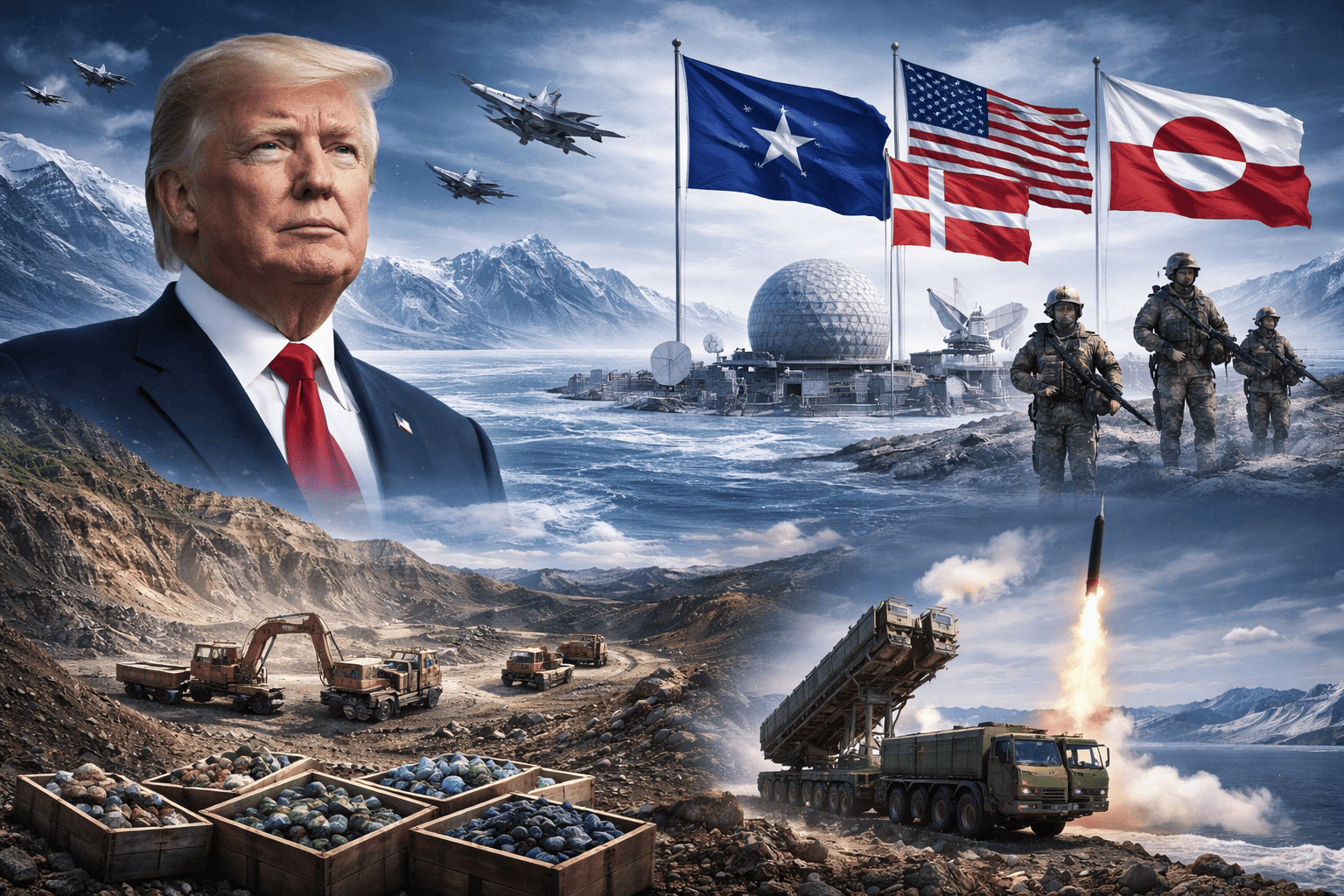
In early 2026, during the World Economic Forum in Davos, President Donald Trump announced what he described as a major breakthrough with NATO leadership. The announcement centered on a framework agreement that would significantly expand the United States role in Greenland. According to Trump, the deal would allow for deeper military cooperation, the potential deployment of US missile systems, and expanded access to Greenland’s vast mineral resources. This statement immediately drew global attention because Greenland sits at the heart of the Arctic, a region that is becoming increasingly important as climate change melts ice and opens new shipping routes and resource opportunities. The Arctic is no longer a frozen backwater. It is rapidly turning into a strategic crossroads where military power, economic ambition, and environmental vulnerability collide.
Why Greenland Matters More Than Ever?
Greenland is the largest island in the world and one of the most strategically located territories on the planet. Positioned between North America and Europe, it has long played a role in transatlantic defense. Since the Cold War, the United States has operated military installations there, including a major space and missile warning base. These facilities form part of a broader network designed to detect and respond to threats aimed at North America and its allies.
What has changed is the environment around Greenland. As Arctic ice retreats, sea lanes that were once impassable are becoming navigable for longer periods each year. This transformation is turning the Arctic into a new maritime highway connecting the Atlantic and Pacific. At the same time, the melting ice is exposing vast mineral deposits that were previously inaccessible. Greenland is believed to hold significant reserves of rare earth elements, graphite, uranium, and other critical minerals that are essential for modern technology, renewable energy systems, and military equipment.
These developments have transformed Greenland from a remote territory into a strategic prize. For Washington, ensuring a strong presence there is no longer optional. It is increasingly seen as a necessity for both security and economic reasons. Trump’s NATO framework deal is rooted in this reality.
The Framework Deal What Was Announced?
At Davos, Trump said he and NATO leadership had reached a framework understanding that would expand cooperation in Greenland. He described a future where the United States would strengthen its military posture in the region, potentially including missile deployments designed to deter threats from rival powers. He also pointed to mining opportunities, saying access to Greenland’s resources would help secure supply chains for critical minerals and reduce dependence on adversaries.
NATO officials confirmed that Arctic security had been discussed and that the alliance recognizes the growing importance of Greenland in collective defense. They stressed that the agreement was not final and that it would require further negotiation with Denmark and Greenland. Still, the language used by Trump suggested a dramatic shift in how the Arctic might be integrated into NATO’s strategic planning.
The deal was also tied to broader transatlantic tensions. Trump indicated that his willingness to cooperate on Arctic security was linked to easing trade disputes with Europe. By doing so, he presented the agreement as both a diplomatic and strategic victory, one that avoided economic conflict while strengthening military alignment.
Sovereignty And The Reaction From Greenland And Denmark
Despite the enthusiasm from Washington, the reaction from Greenland and Denmark was cautious and firm. Greenland is a self governing territory within the Kingdom of Denmark. While it manages its own domestic affairs, Denmark retains responsibility for foreign policy and defense. Both governments quickly emphasized that Greenland’s sovereignty is not up for negotiation.
Leaders in Nuuk and Copenhagen made it clear that any discussions about military expansion or resource development must include Greenland as an equal partner. They rejected any suggestion that decisions about the territory could be made without Greenlandic consent. This stance reflects long standing sensitivities rooted in Greenland’s history and its push for greater autonomy.
For many Greenlanders, the idea of foreign powers competing over their land raises concerns about being treated as a strategic object rather than a community with its own rights and priorities. The strong response from Greenland’s leadership signaled that while cooperation with allies is welcome, it cannot come at the cost of self determination.
Mining Ambitions And Economic Opportunity
One of the most significant aspects of the framework deal is its economic dimension. Greenland’s mineral wealth has been known for years, but harsh conditions and limited infrastructure slowed development. Now, as technology improves and the Arctic becomes more accessible, those resources are attracting intense interest.
Rare earth elements are especially valuable. They are used in smartphones, wind turbines, electric vehicles, and advanced weapons systems. Today, much of the world depends on supplies controlled by a small number of countries. Securing alternative sources is a top priority for Western governments.
Trump’s emphasis on mining reflects this strategic urgency. By promoting US involvement in Greenland’s resource sector, he aimed to position the United States as a leading player in Arctic development. Supporters argue this could bring investment, jobs, and infrastructure to Greenland while strengthening Western supply chains.
However, critics warn that mining carries serious environmental and social risks. Greenland’s ecosystems are delicate, and large scale extraction could cause long term damage. Indigenous communities have also raised concerns about how development might affect their land, culture, and livelihoods. Any push for mining must therefore balance economic benefits with environmental protection and community consent.
The Arctic As A New Geopolitical Theater
The framework deal cannot be understood in isolation. It is part of a broader shift in global politics toward the Arctic. Russia has expanded its military infrastructure along its northern coast. China has declared itself a near Arctic state and invested in research and shipping projects. These moves have alarmed Western governments, which see the Arctic as an emerging frontline in great power competition.
For NATO, the region poses both an opportunity and a challenge. Traditionally focused on Europe and the North Atlantic, the alliance now faces pressure to adapt to a changing strategic map. Greenland is central to this adaptation because it links North America and Europe and sits astride key air and sea routes.
Trump’s deal pushes NATO further into the Arctic spotlight. It signals that the alliance is no longer content to treat the region as peripheral. Instead, it sees it as a core area for deterrence and defense in the twenty first century.
Domestic Politics And Trumps Leadership Style
At home, Trump’s announcement fit his broader political style. He presented the framework deal as evidence of strong leadership and deal making. Supporters praised him for standing up to rivals and securing advantages for the United States. They saw the Greenland plan as part of a larger effort to protect American interests in a competitive world.
Opponents, however, accused him of unilateralism and of risking diplomatic fallout. They argued that linking security cooperation to economic pressure undermines trust among allies. They also questioned whether the administration had adequately consulted Congress and international partners before making such a high profile announcement.
The controversy highlights deeper debates in American politics about the role of alliances, the use of power, and the balance between national interest and multilateral cooperation.
Environmental Stakes In A Warming Arctic
Beyond politics and economics lies the environmental reality. The Arctic is warming faster than any other region on Earth. Melting ice is not only opening opportunities but also accelerating climate change impacts worldwide. Greenland’s ice sheet plays a crucial role in regulating global sea levels.
Increased military and mining activity in the region could worsen environmental stress. Infrastructure development, shipping traffic, and industrial operations all carry risks of pollution and habitat disruption. For environmental advocates, the framework deal raises alarms about turning a climate sensitive region into a zone of intense human activity.
They argue that any strategic planning for Greenland must include strong commitments to sustainability and climate responsibility. Otherwise, short term geopolitical gains could come at the expense of long term planetary stability.
Conclusion
Trump’s NATO framework deal on Greenland marks a pivotal moment in Arctic geopolitics. It reflects a world where melting ice is redrawing maps of power and opportunity. The agreement points toward a future in which Greenland becomes more deeply integrated into military strategy and global resource networks.
Yet the deal remains a framework rather than a finished treaty. Its success will depend on negotiations with Denmark and Greenland, on NATO consensus, and on how well leaders balance security, sovereignty, economic ambition, and environmental protection.