Introduction
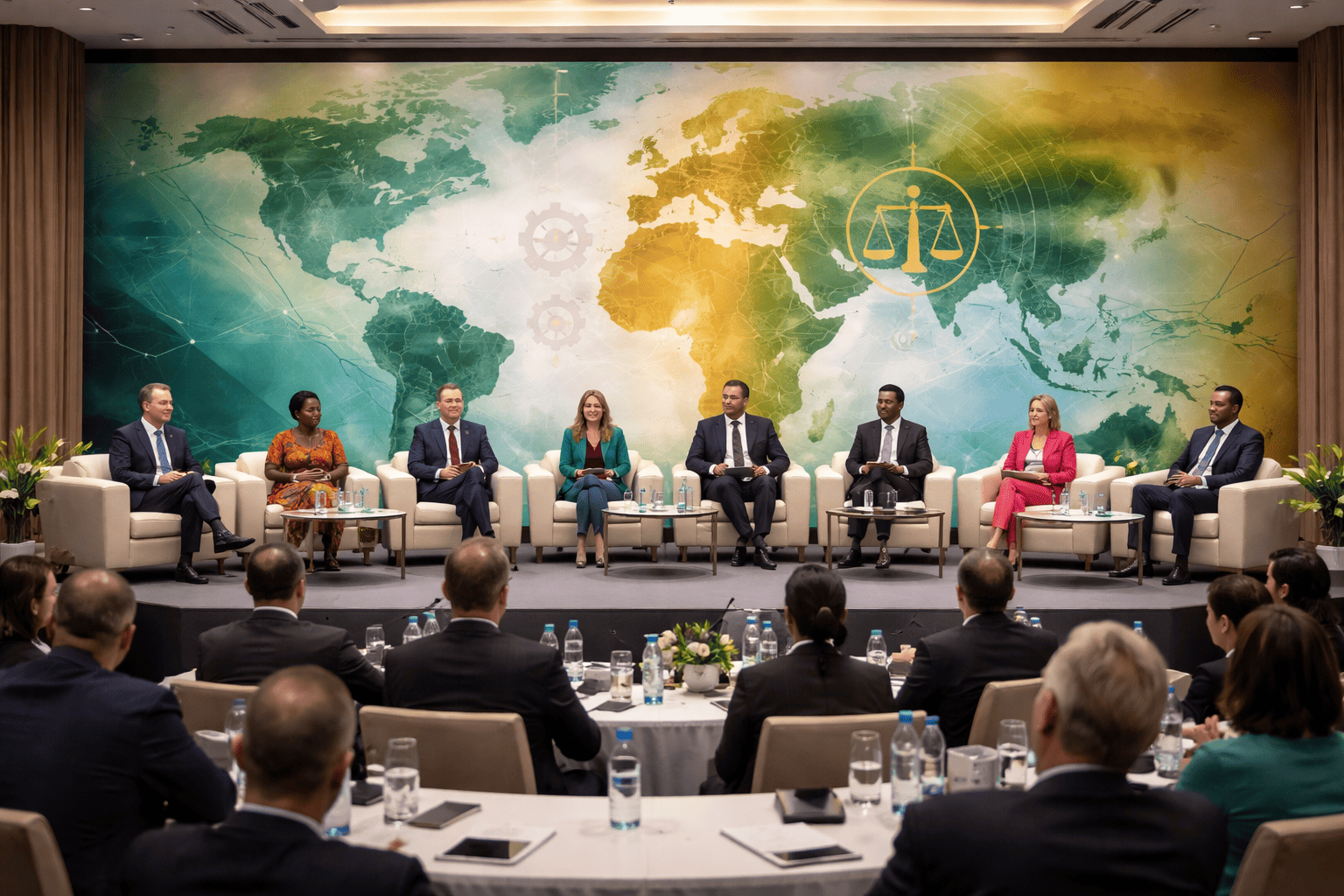
The global demand for transition minerals required for the energy transition, electrification, decarbonization, and future technologies is rising at unprecedented rates, prompting not only market competition but also an urgent need for coherent global governance structures. Against this backdrop, a pivotal invitational, high-level roundtable took place on the sidelines of the 2026 Investing in African Mining Indaba in Cape Town, South Africa. The event was convened by the Paris Peace Forum and its Global Council for Responsible Transition Minerals in partnership with Sustainable Energy for All. It brought together representatives from producing countries, G7 governments, major industry stakeholders, and civil society organizations to examine a critical question: how to uphold high standards of responsible mineral production and supply-chain transparency without creating fragmented markets that disadvantage resource-rich nations, many of which are located in Africa.
The Context And Importance Of Mineral Governance
One of the key starting points of the roundtable discussion was the recognition of the Critical Minerals Action Plan and Roadmap adopted by G7 leaders in 2025. This plan emphasizes the creation of standards-based markets with robust compliance, traceability, and sustainability criteria intended to secure resilient supply chains and promote responsible sourcing. While these goals are critical for long-term global decarbonization strategies, stakeholders at the roundtable emphasized that there is a delicate balance to be struck between strong governance and maintaining equitable market access for producing countries.
Benjamin Gallezot, France’s Interministerial Delegate for Strategic Minerals and Metals Supplies, highlighted that critical minerals are set to be one of the central themes of the French G7 Presidency in 2026. These minerals play a vital role in industrial development and the energy transition, while also being affected by growing geopolitical and trade constraints. This underscores the strategic importance that major economies now place on minerals — not only as commodities but as elements of geopolitical influence and economic security.
Africa, home to large reserves of many transition minerals, sits at the heart of this global dynamic, experiencing increased exploration, production, and local processing activity. Governments across the continent are seeking to align mining strategies with national development goals, prioritizing local beneficiation, and attracting investment that supports long-term industrialization. However, there is concern that emerging market access requirements and strict standards, if developed exclusively by importing economies or select blocs, could marginalize producers and limit their participation in the value chains they are expected to fuel.
Key Themes And Strategic Recommendations From The Roundtable
Central to the roundtable was the Global Council’s Position Paper titled Ensuring High Standards Without Fragmenting Markets, which served as both a foundation for discussions and a blueprint for action. The paper offers concrete pathways to reconcile the dual imperatives of responsible practice and inclusive market access, focusing on several core elements:
- Building on existing tools and frameworks rather than creating parallel systems that might complicate compliance for producers.
- Avoiding the weaponization of standards as economic or geopolitical leverage against producers; standards should facilitate fair participation rather than erect barriers.
- Engaging producer countries beyond the G7 early and substantively in policymaking processes to ensure their perspectives and priorities are integrated into global frameworks.
- Fostering responsible industrialization that supports diversification, beneficiation, and sustainable development in producing economies.
- Unlocking investment flows and scaling financing mechanisms that facilitate capacity building, infrastructure development, and inclusive value chains.
Participants homed in on four key objectives for operationalizing these recommendations: refining the Position Paper with input from African stakeholders and investors, identifying conditions for inclusive design of standards-based markets, gathering ideas for practical implementation through existing tools, financing mechanisms, and development finance institutions, and preparing a structured set of messages and priorities to feed into the 2026 French G7 Presidency’s agenda on transition minerals.
Discussions also highlighted broader industry trends witnessed at Mining Indaba 2026 overall, including heightened focus on regional collaboration, cross-border investment frameworks, and policy harmonization across Africa’s mining landscapes. Many sessions at the broader conference underscored the importance of rights-based approaches, multi-stakeholder cooperation, and catalytic funding — themes that aligned with the roundtable’s conversations about inclusivity and equitable market access.
Broader Perspectives On Mining Indaba 2026
The Mining Indaba itself, one of the world’s largest gatherings of mining decision-makers, investors, and policy leaders, served as an important backdrop for the roundtable. Under the theme “Stronger Together: Progress Through Partnerships,” Indaba 2026 emphasized collaborative approaches between governments, industry, investors, and civil society as a pathway to accelerating mining sector development, particularly around critical minerals. Sessions throughout the conference spotlighted upstream exploration, downstream beneficiation, infrastructure development, and innovation — all underpinned by the importance of aligned policies and shared value creation.
The world’s largest multilateral mining forum highlighted discussions on inclusive growth, indigenous participation, ecosystem partnerships, and industrial strategies designed to expand economic benefits beyond extraction. Side events, panels, and workshops explored topics ranging from shared infrastructure models to trade access for women-led enterprises and regulatory frameworks for re-processing waste rock and tailings. These diverse conversations, while extending beyond the roundtable, provided a broader context in which standards-based market discussions were situated — reaffirming the need for integrated approaches that span governance, finance, and equitable market participation.
Looking Ahead To The 2026 French G7 Presidency
A critical outcome of the roundtable was the reaffirmation that its insights will feed directly into the agenda of the 2026 French G7 Presidency, with transition minerals as one of the presidency’s priority areas. As governance of mineral supply chains becomes increasingly intertwined with climate policy, development agendas, and geopolitical stability, the conversations held in Cape Town are expected to shape high-level deliberations among G7 members and broader multilateral forums.
The emphasis going forward is on collaborative action that bridges producers and consumers, aligns standards with development imperatives, and ensures that markets remain open, fair, and conducive to sustainable growth. By advancing an inclusive model for standards-based markets, stakeholders hope to enable a future in which African producers can fully participate in and benefit from the global energy transition, contributing to both national development and broader global decarbonization goals.
Conclusion
The High-Level Roundtable at Mining Indaba 2026 brought to the fore a nuanced understanding of the challenges and opportunities embedded in the future of transition minerals governance. It highlighted that while global frameworks and standards are necessary to advance transparency, sustainability, and accountability, they must be designed collaboratively with input from producers, investors, and civil society alike. Integrating diverse perspectives, particularly from resource-rich nations, will not only enhance global supply-chain resilience but also support equitable economic growth in producing countries.