Introduction
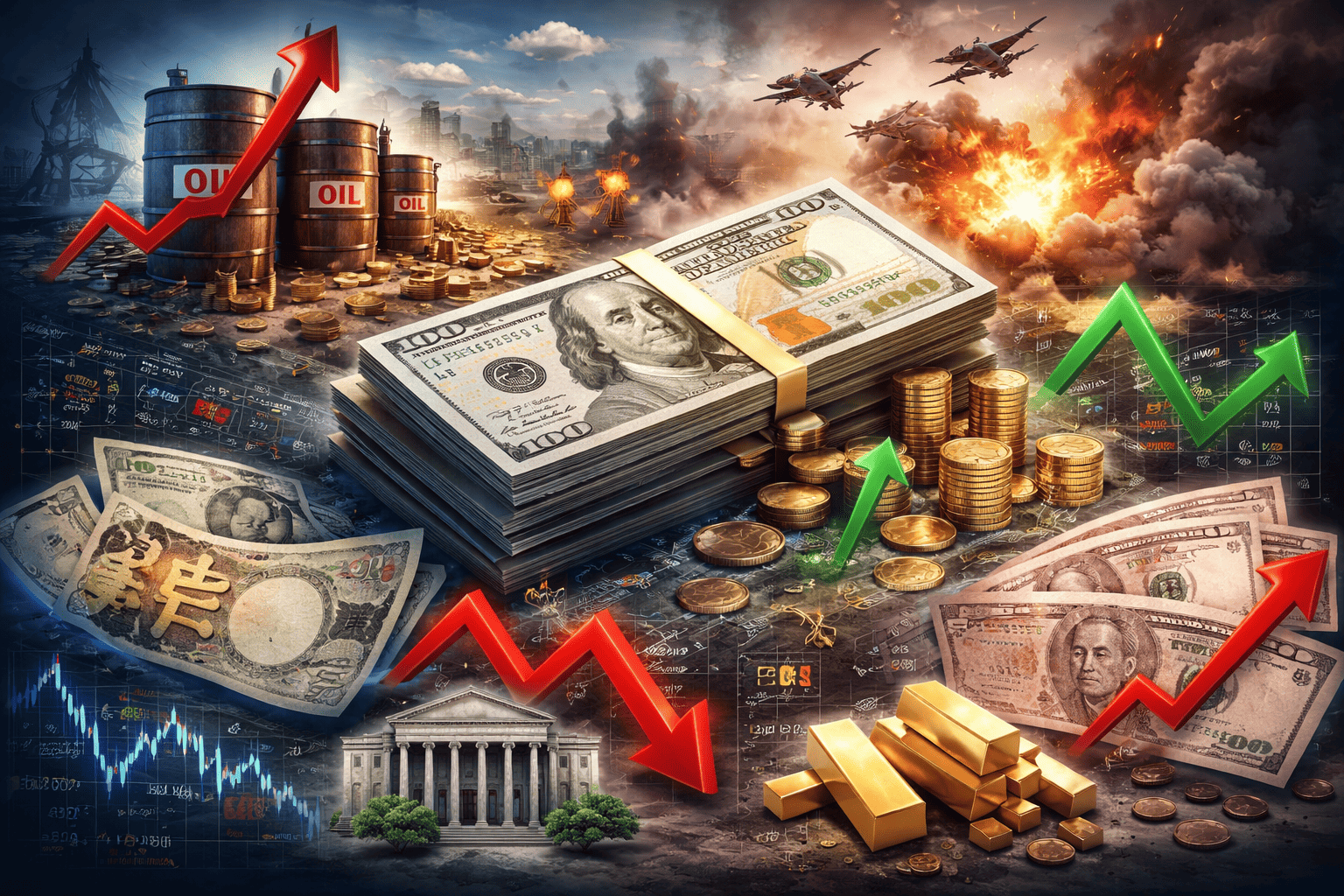
The global foreign exchange market is going through one of its most unstable times in recent years. This is because to rising oil prices, geopolitical tensions, and changes in monetary policy that are affecting the value of currencies around the world. Recent events in the Middle East have kicked off a chain reaction in financial markets, pushing investors toward safe haven assets and putting a lot of pressure on both developing and developed market currencies. In this situation, the US dollar has become the most powerful currency. It has been stronger against most other currencies, while others have had to deal with inflation worries, energy shocks, and capital outflows.
The changes are caused by a complicated relationship between geopolitical risk, energy markets, and what central banks expect. As uncertainty grows and conventional linkages in the currency markets are called into question, investors are quickly changing their plans. This article looks at the main factors that are affecting the current forex market, including how global events are affecting currencies and what traders and investors might expect in the next few weeks.
Forex Markets Are Moving Because Of Rising Geopolitical Tensions
The biggest reason for the present changes in the currency market is the growing war in the Middle East, which has made investors less willing to take risks in other markets. As tensions rise between major nations, investors are looking for safe places to put their money, which has led to a boom in demand for the US dollar. Recent reports say that the problem has gotten so bad that experts say it might have an economic impact that is similar to or even worse than past oil shocks.
Because of this unstable geopolitical situation, investors are avoiding riskier currencies and assets, which is a classic risk-off atmosphere. Emerging market currencies have been hit the hardest because money is leaving these economies in search of stability. The euro and the British pound, which are both currencies from developed markets, are also going down because they are sensitive to changes in energy prices and economic uncertainties.
The conflict’s uncertainty has also led to further concern in the markets about possible problems with important energy supply lines, such as the Strait of Hormuz, which is very important for moving oil across the world. Any problems in this area have big effects on inflation and currency stability, which is why forex traders all around the world pay close attention to it.
The US Dollar Is A Strong Safe Haven Around The World
The US dollar has always been a secure place to put your money when things are uncertain, and this time is no different. As investors put their money into what they think is the safest and most liquid asset, the dollar has gotten a lot stronger against a group of major currencies. The US economy is quite strong, and it is a net energy exporter, which protects it from rising oil prices. This tendency is supported by these facts.
The dollar index has been steadily rising, showing that demand is strong across the board and that capital flows are changing around the world. When people are less willing to take risks, the dollar benefits from both safe haven inflows and the assumption of tighter monetary policy. Analysts say that the dollar is gaining a lot of strength because of both geopolitical risk and economic fundamentals. This trend could continue for a while.
This strength is having an effect on more than just key currency pairs. It is also changing the way trade works around the world, since a stronger dollar makes imports more expensive for many countries and makes exports less competitive. As a result, the repercussions of the dollar’s rise are being felt in many areas and industries, showing how important it is to the global financial system.
The Rise In Oil Prices And What It Means For Currency Markets
Another big reason for the volatility in the FX market is that oil prices have shot up above $110 per barrel because people are worried about supply problems. The rise in crude oil prices is directly related to tensions between countries and has become a major determinant in how currencies move.
Higher oil prices cause inflation, which affects economies in different ways depending on how much energy they use. Countries in Europe and Asia that rely significantly on oil imports are seeing their expenses rise, which hurts their currencies and makes it harder for their economies to thrive. On the other hand, oil-exporting countries may see their currencies strengthen as they make more money.
The link between the oil and forex markets is clear in the way that the Japanese yen and the euro have both lost value as energy prices have gone up. Analysts say that high oil prices might cause currencies in these areas to stay weak for a long time, while currencies related to energy exports or backed by strong economic fundamentals could get stronger.
The Japanese Yen Is Under A Lot Of Pressure And There Is A Risk Of Intervention
The Japanese yen, which has long been seen as a safe haven currency, is now under a lot of strain because of its particular economic situation. Japan’s economy is vulnerable to rising oil costs since it relies largely on energy imports. Because of this, the yen has lost a lot of value against the US dollar, getting close to levels that worry authorities.
The Japanese government has said that they are ready to step in and stabilize the yen in the foreign exchange market to stop it from being too volatile. Officials have pointed out that speculative trading and changes in the energy market are two of the main reasons why currencies change value. They have also said that intervention may be needed if the situation gets worse.
The possibility of intervention makes the forex markets even more complicated because traders have to think about not only economic fundamentals but also policy actions that could affect currency movements. The yen is still one of the most keenly watched currencies right now. Its path will probably be affected by both shocks from outside the country and policy reactions from inside the country.
Emerging Market Currencies Are Under A Lot Of Stress
Emerging market currencies are being affected the most by the current state of the world. For instance, the Indian rupee has dropped to historic lows versus the US dollar because of increased oil prices, money leaving the country, and economic instability.
The rupee’s drop shows how fragile emerging economies are to outside shocks, especially those that have to do with energy and the state of the global economy. As the price of oil goes up, the cost of imports goes up, which causes inflation to rise and current account deficits to grow. At the same time, international investors may pull out money because of the higher risk, which will make local currencies even weaker.
This phenomenon isn’t just happening in India; it’s also happening in other emerging markets where the same things are happening. As a result, developing market currencies are losing value across the board, which could have big effects on the stability and growth of the global economy.
Central Banks Are Moving Toward Hawkish Policies
The current situation is also affecting the policies of central banks, who are reevaluating their monetary plans because of mounting inflation fears. Policymakers are responding to the risk of long-term inflation caused by rising energy prices by lowering expectations for interest rate decreases, especially in the United States.
This change toward a more hawkish approach helps the US currency by making the difference in yields between the US and other nations bigger. Higher interest rates bring in more money and make the currency stronger, which creates a feedback loop that makes market trends even stronger.
Other central banks are also having a hard time making judgments since they have to weigh the necessity to keep inflation in check against the threats to economic growth. Different countries have different monetary policies, which is making the FX markets more volatile as investors change their expectations and move their money around.
Market Volatility And Global Risk Sentiment
The overall state of the financial markets shows that risk sentiment has dropped a lot as investors deal with geopolitical uncertainties and economic problems. The stock market has gone down while bond yields have gone up, which means that people are moving toward safer investments.
This feeling of risk off is a big reason why currencies move, since it affects capital flows and investment choices. When demand goes up for safe haven currencies like the US dollar, they do well. When demand goes down for risk-sensitive currencies, they have to sell. The way that risk sentiment and currency markets affect each other shows how important global macroeconomic considerations are in determining forex patterns.
As long as there are geopolitical tensions and economic uncertainties that affect how the market works, volatility is likely to be high. Traders have to deal with a complicated world where many things affect each other and change quickly. This means they need to keep informed and be able to adapt.
What To Expect From Forex Markets In The Next Few Weeks?
The future of the currency markets will depend a lot on what happens in the Middle East and how it affects energy prices and the state of the global economy. If tensions increase much more and oil prices keep going up, the dollar will probably stay strong and other currencies will stay weak.
On the other hand, any signs of de-escalation or stabilization in energy markets might cause some of these tendencies to change as people become more willing to take risks and money flows change. As politicians respond to changes in the economy, actions by central banks will also be very important in deciding how currencies move.
Analysts say that traders should keep a tight eye on important factors like oil prices, inflation data, and geopolitical events to predict how the market will react. The way these things work together will determine the direction of the currency markets and give investors both problems and chances.
Conclusion
The global FX market is being changed right now by a strong mix of rising oil prices, geopolitical concerns, and changing monetary policies. The US dollar has become the most important currency because people want to keep their money safe and the economy is strong. Other currencies, on the other hand, have a lot of problems.
The Japanese yen is getting weaker, and the Indian rupee is at an all-time low. These developments are having an effect on the whole world financial system. As uncertainty continues to affect how the market behaves, volatility is expected to stay high, which means traders and investors will need to carefully analyze the situation and make smart decisions.
To be able to navigate the forex market in this complicated climate, you need to know what is driving these changes. Market participants can better prepare for changes and take advantage of new possibilities by keeping up with geopolitical events, energy trends, and central bank policies.