Introduction
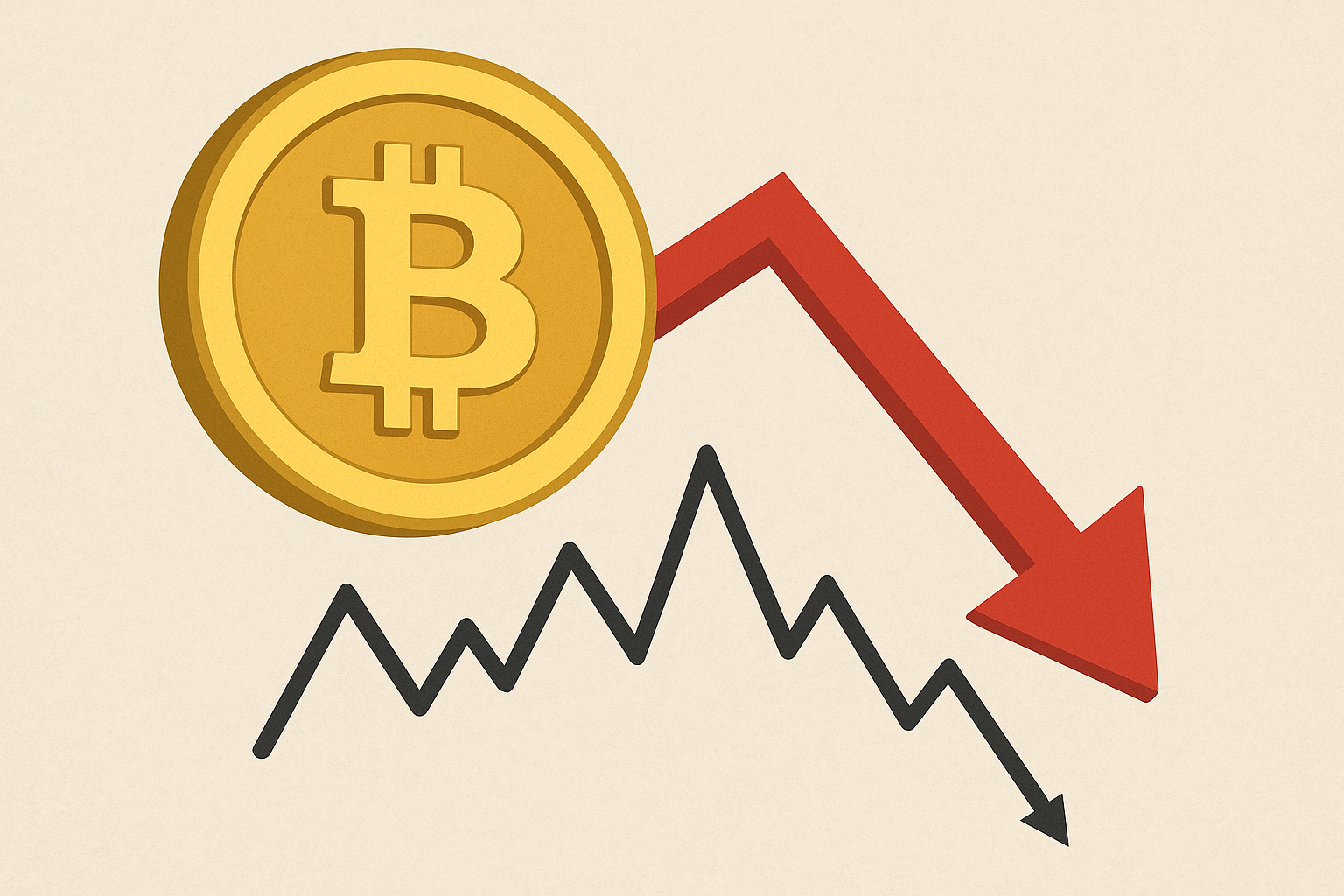
Bitcoin, the world’s largest and most influential cryptocurrency, has recently experienced a sharp decline, falling below the 100,000 USD mark for the first time in several months. This drop represents a critical shift in both investor sentiment and broader market dynamics. After months of sustained optimism and strong gains, the correction below six figures has reignited discussions about Bitcoin’s volatility, its dependence on institutional flows, and the changing nature of the crypto market.
The significance of Bitcoin falling below this psychological level cannot be overstated. Round numbers like 100,000 USD serve as symbolic milestones in financial markets. When prices fall below these thresholds, it can lead to cascading reactions — traders re-evaluate risk exposure, institutional players adjust their portfolios, and retail investors often panic-sell.
The Significance Of The Drop
Bitcoin’s descent below 100,000 USD marks its weakest level in months. After climbing to highs of over 126,000 USD earlier in the year, the price has since tumbled by more than 20%. This correction, though not unprecedented, has raised concerns because it interrupts what had been a steady upward trajectory supported by strong institutional demand and growing mainstream acceptance.
The fall below this level has a profound psychological impact on the market. Investors who saw 100,000 USD as a floor of stability are now questioning whether the recent bull cycle has reached exhaustion. Historically, Bitcoin has faced steep corrections after prolonged rallies — often shedding 20% to 40% before resuming upward momentum. Whether this current decline represents a temporary correction or the start of a larger retracement remains to be seen.
Key Drivers Behind The Decline
1. Institutional and ETF Outflows
One of the most influential forces behind this drop has been the shift in institutional sentiment. Spot Bitcoin exchange-traded funds (ETFs), which had previously been a source of consistent inflows, have recently seen significant outflows. Roughly 1.3 billion USD has left Bitcoin ETFs since late October, while around 500 million USD has exited spot Ether ETFs.
When large institutional investors reduce their holdings, it puts downward pressure on prices. Institutional activity has grown to dominate Bitcoin’s market structure, meaning that movements in these funds can now significantly influence short-term direction. These outflows signal that major investors may be taking profits or repositioning for a period of higher volatility.
2. Profit-Taking and Market Positioning
Another key factor is profit-taking after months of strong performance. Many traders who bought during previous dips saw this rally as an opportunity to lock in gains. Once selling started, it quickly snowballed into a larger move as traders with leveraged positions were liquidated, amplifying the decline.
Bitcoin’s market is particularly sensitive to momentum shifts because of the prevalence of leverage. When prices start to fall, margin calls and automated liquidations can accelerate the selling pressure, creating steep intraday declines.
3. Shifts in Market Sentiment
Sentiment indicators such as the fear and greed index have moved from neutral to fear. As investor optimism fades, buying demand decreases, and traders begin to anticipate further downside. This creates a self-reinforcing loop: falling prices generate fear, which reduces buying interest, pushing prices even lower.
The emotional component of crypto markets cannot be underestimated. Because Bitcoin trades around the clock and across global exchanges, sentiment spreads rapidly. Social media, market narratives, and influencer commentary all play a role in driving short-term momentum.
4. Technical Factors and Support Levels
From a technical perspective, Bitcoin has broken several key support levels. After falling through 110,000 USD and 107,000 USD, it is now testing 100,000 USD — a zone that previously acted as a psychological barrier. The next critical level lies around 95,000 USD. If that fails, further declines toward 90,000 USD could occur.
Chart patterns suggest that Bitcoin has entered a short-term downtrend characterized by lower highs and lower lows. Moving averages, particularly the 50-day and 200-day lines, are beginning to converge, potentially forming a “death cross” pattern that often signals bearish momentum.
5. Macroeconomic and Regulatory Headwinds
Beyond the crypto market itself, global economic and regulatory factors have played a role. Persistent uncertainty about interest rates and inflation continues to affect investor risk appetite. When central banks delay rate cuts or adopt a more cautious stance, speculative assets like cryptocurrencies tend to suffer.
Additionally, ongoing regulatory developments in key jurisdictions, such as the United States and Europe, have contributed to market unease. Heightened scrutiny of major exchanges and crypto platforms, along with evolving taxation rules, adds an extra layer of uncertainty for institutional investors who seek regulatory clarity before re-engaging heavily with the market.
Market Impact And Broader Implications
The fall below 100,000 USD has rippled through the entire crypto ecosystem. Altcoins, which typically follow Bitcoin’s direction but with higher volatility, have experienced sharper declines. Many high-cap tokens have fallen between 10% and 20% in the same period.
Liquidity has also thinned across exchanges as traders reduce exposure. Lower liquidity means that price swings become even more pronounced, and bid-ask spreads widen. This environment is particularly challenging for smaller traders, as volatility increases execution risk.
Another noticeable shift is occurring in derivatives markets. Open interest in Bitcoin futures has declined, suggesting that traders are closing positions or waiting for clearer price direction. Funding rates, which measure the cost of holding leveraged positions, have also normalized, indicating that speculative fervor has cooled significantly compared to previous months.
Possible Scenarios For The Coming Weeks
Scenario 1: Stabilization and Recovery
If Bitcoin holds above the 95,000 to 100,000 USD range, it could consolidate before mounting a rebound. For this to occur, institutional inflows would need to stabilize, and broader market sentiment would have to shift from fear to cautious optimism. A bounce back toward 110,000 USD could restore confidence and encourage sidelined investors to return.
Scenario 2: Extended Correction
If selling pressure continues and Bitcoin breaks decisively below 95,000 USD, the market could enter a deeper correction phase. In this case, prices might fall toward 85,000 USD or lower before finding new support. Such a scenario would likely coincide with continued ETF outflows, tighter financial conditions, or new regulatory setbacks.
Scenario 3: Macro-Driven Rebound
A third possibility is that external macroeconomic factors trigger renewed risk-taking across global markets. For instance, an unexpected interest-rate cut or positive inflation data could lift overall market sentiment, leading to a broad recovery in risk assets, including cryptocurrencies.
Lessons For Traders And Investors
Risk Management Is Essential
The recent downturn highlights the importance of proper risk management. Traders should set clear stop-loss levels and avoid excessive leverage during volatile periods. Long-term investors should remain disciplined and avoid emotional reactions to short-term fluctuations.
Focus on Market Structure, Not Just Price
Rather than focusing solely on daily price movements, investors should pay attention to the structure of the market — particularly liquidity, fund flows, and institutional participation. Understanding how these elements interact provides better insight into potential trend reversals.
Diversification Matters
The correction also reinforces the value of diversification. Allocating capital across multiple asset classes can help reduce the impact of Bitcoin’s volatility. Stablecoins or yield-generating assets can provide stability during turbulent periods.
Stay Informed but Avoid Panic
Information spreads quickly in crypto markets, but not all of it is reliable. Investors should rely on credible sources and data-driven analysis rather than speculation. Emotional decision-making, especially during sharp declines, often leads to poor outcomes.
The Broader Context – Is This A Normal Correction?
While the drop below 100,000 USD feels dramatic, it is not unusual in Bitcoin’s historical context. Bitcoin has a long record of deep but temporary corrections within broader bull markets. The asset’s price can fall 20% or more in a matter of days and still resume its upward trajectory once market equilibrium is restored.
This volatility is partly a feature of Bitcoin’s relatively young and dynamic market structure. As institutional adoption grows and regulatory frameworks mature, price swings may eventually become less extreme. Until then, such pullbacks remain an inherent part of the crypto investment landscape.
Conclusion
Bitcoin’s fall below 100,000 USD represents a significant moment for the cryptocurrency market. It signals a pause in the strong upward momentum that had defined much of the year, while reminding investors of Bitcoin’s inherent volatility and sensitivity to external forces.
Several factors have converged to create this downturn — institutional outflows, profit-taking, weakening sentiment, technical breakdowns, and macroeconomic headwinds. Whether this decline marks the end of a bullish cycle or merely a correction within a broader uptrend depends on how markets react in the coming weeks.