Introduction
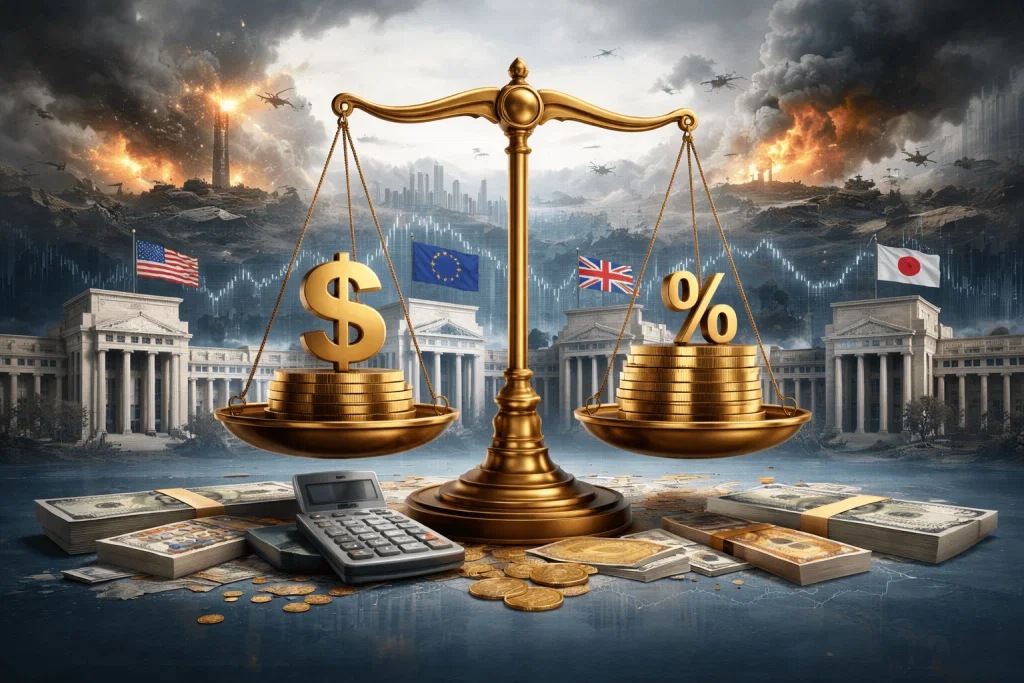
The global economy in 2026 is experiencing a period of heightened uncertainty as central banks across the world adopt a cautious stance toward monetary policy. With geopolitical tensions intensifying, particularly due to ongoing conflict in the Middle East, policymakers are facing an increasingly complex environment. The combination of rising energy prices, persistent inflation, and slowing economic growth has created a delicate situation where any aggressive policy move could have unintended consequences. As a result, most central banks have chosen to hold interest rates steady while closely monitoring developments.
A Global Pause In Monetary Policy
One of the most notable trends in the current economic landscape is the coordinated pause in interest rate changes across major economies. In recent months, most central banks in developed nations have decided to leave their policy rates unchanged. This collective decision highlights a shared concern about the unpredictability of global economic conditions.
The decision to pause is largely driven by conflicting economic signals. While inflation remains a concern in many countries, economic growth is showing signs of slowing. Tightening monetary policy further could risk pushing economies into recession, while easing policy could reignite inflationary pressures. In this uncertain environment, central banks are choosing to observe and analyze rather than act decisively.
This approach marks a shift from previous years, where central banks responded more aggressively to inflation and growth concerns. Now, the focus is on maintaining stability and avoiding policy errors that could worsen the situation.
The Role Of Geopolitical Conflict
Geopolitical tensions have emerged as a key driver of global economic uncertainty. The ongoing conflict in the Middle East has disrupted energy markets and created significant volatility in oil prices. These disruptions have had a ripple effect across the global economy, increasing costs for businesses and consumers alike.
Rising oil prices have a direct impact on inflation, as they raise the cost of transportation, manufacturing, and energy consumption. This creates additional challenges for central banks, which are already struggling to manage inflation levels. At the same time, higher energy costs can reduce consumer spending and business investment, further slowing economic growth.
The unpredictable nature of geopolitical developments makes it difficult for policymakers to plan ahead. Central banks cannot accurately forecast how long the conflict will last or how severe its economic impact will be. This uncertainty is a major reason why they are choosing to remain cautious and avoid making significant policy changes.
Inflation Versus Growth Dilemma
Central banks are currently facing one of the most challenging economic dilemmas: balancing inflation control with the need to support economic growth. Inflation has been driven higher by rising energy prices and supply chain disruptions, while economic growth is losing momentum in many regions.
This combination of high inflation and weak growth creates a situation that is difficult to manage using traditional monetary policy tools. Raising interest rates can help reduce inflation, but it can also slow down economic activity even further. On the other hand, lowering rates to stimulate growth could worsen inflation.
As a result, central banks are adopting a cautious approach, carefully analyzing economic data before making decisions. They are paying close attention to indicators such as employment levels, consumer spending, and inflation trends. This wait and see strategy reflects the complexity of the current economic environment.
Diverging Trends In Emerging Markets
While developed economies have largely maintained stable interest rates, emerging markets have shown more varied responses. Some countries have opted for small rate cuts, indicating confidence that inflation pressures are easing. Others have taken a more aggressive approach by raising rates to combat persistent inflation.
These differences highlight the unique challenges faced by each economy. Emerging markets often have less stable financial systems and are more vulnerable to external shocks, such as changes in global commodity prices or currency fluctuations. As a result, their policy responses may differ from those of developed nations.
Despite these variations, the overall trend in emerging markets also points toward caution. Most central banks are avoiding drastic policy changes and are instead making gradual adjustments based on their specific economic conditions.
The Impact Of Oil Price Volatility
Oil prices have become a central factor influencing global economic conditions in 2026. The disruption of supply chains due to geopolitical conflict has led to significant fluctuations in energy prices. These changes have far reaching effects on inflation, trade balances, and overall economic stability.
For countries that rely heavily on imported energy, higher oil prices can increase trade deficits and put pressure on their currencies. This can lead to financial instability and force central banks to take action to support their economies.
At the same time, oil exporting countries may benefit from higher prices, but they are not immune to the broader economic impact of global uncertainty. Central banks around the world are closely monitoring energy markets as they assess their policy options.
Challenges In Measuring Inflation Expectations
Accurately measuring inflation expectations has become increasingly difficult in the current environment. Central banks rely on various tools and models to predict how inflation will evolve, but these methods are not always reliable in times of rapid change.
Consumer behavior, market sentiment, and external factors such as geopolitical events can all influence inflation expectations. These variables are difficult to quantify and can change quickly, making it challenging for policymakers to make informed decisions.
As a result, central banks are placing greater emphasis on judgment and experience when setting policy. This shift reflects the limitations of traditional economic models and the need for a more flexible approach in uncertain times.
Financial Market Reactions
Financial markets have responded strongly to the current environment of uncertainty. Investors are closely watching central bank decisions and geopolitical developments, leading to increased volatility in both stock and bond markets.
Bond yields have risen in many countries, reflecting expectations of higher inflation and the possibility of future interest rate increases. At the same time, stock markets have experienced fluctuations as investors adjust their expectations for economic growth.
The US dollar has also strengthened in response to global uncertainty, as investors seek safe haven assets. This has created additional challenges for emerging markets, where a stronger dollar can lead to capital outflows and currency depreciation.
Limited Room For Policy Maneuver
Central banks today face significant constraints in their ability to respond to economic challenges. In a highly interconnected global economy, policy decisions in one country can have far reaching effects on others. This limits the ability of central banks to act independently.
Additionally, many central banks have already used significant portions of their policy tools in recent years. Interest rates in many countries are already at relatively high levels, leaving limited room for further increases without risking economic slowdown.
This lack of flexibility reinforces the cautious approach being taken by policymakers. Rather than making bold moves, central banks are focusing on maintaining stability and minimizing risks.
Outlook For The Global Economy
The outlook for the global economy remains uncertain as geopolitical tensions continue to influence economic conditions. While some regions may experience moderate growth, others may face significant challenges due to rising costs and slowing demand.
Inflation is expected to remain elevated in the near term, driven by energy prices and supply chain disruptions. At the same time, economic growth may remain subdued as businesses and consumers adjust to changing conditions.
Central banks will need to remain flexible and responsive to new developments. Their ability to navigate this complex environment will play a crucial role in shaping the future of the global economy.
Conclusion
The global economic environment in 2026 is defined by uncertainty, complexity, and cautious decision making. Central banks around the world are choosing to hold interest rates steady as they assess the impact of geopolitical tensions, inflation, and economic slowdown.
This cautious approach reflects the challenges of balancing competing priorities in an unpredictable environment. By focusing on stability and avoiding drastic policy changes, central banks aim to minimize risks and support long term economic health.
As the situation continues to evolve, policymakers will need to adapt their strategies to changing conditions. The coming months will be critical in determining whether the global economy can achieve stability or face further challenges.