Introduction
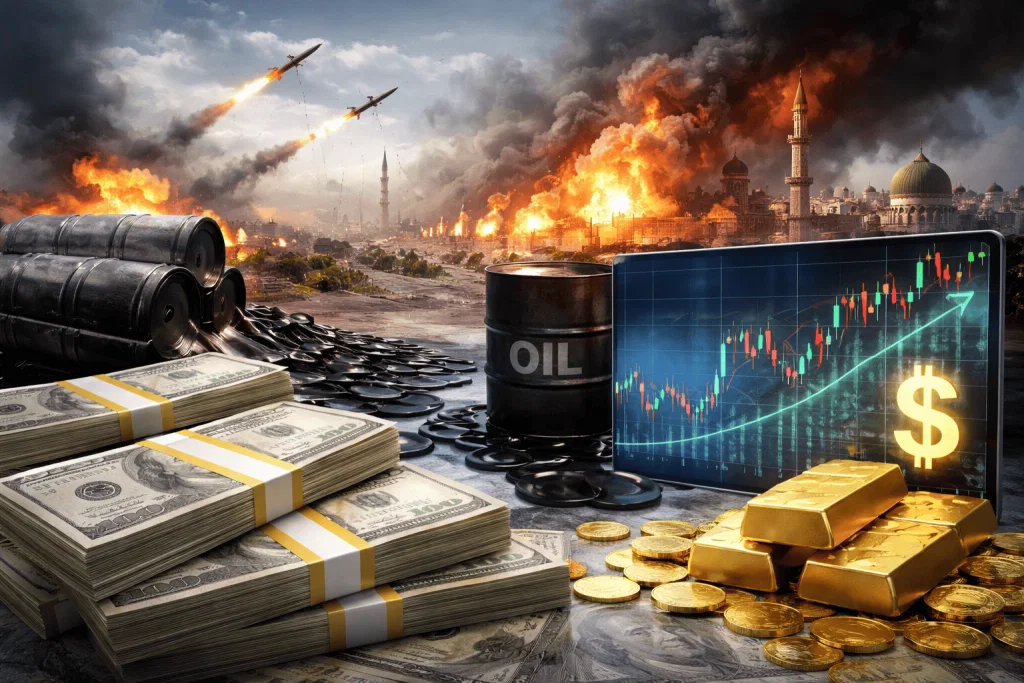
The global foreign currency market is becoming more volatile as tensions in the Middle East rise and energy markets respond sharply to interruptions in supply. As investors look for stability in uncertain times, the US dollar has risen strongly versus other major currencies. Currency markets throughout the world are changing because of rising oil costs, worries about inflation, and demand for safe havens.
Geopolitical Tensions Are Making The Forex Market More Volatile
Changes in geopolitics may have instantaneous effects on financial markets, and the present tensions with Iran are no different. The rising instability in the area has made people worry that important oil transport routes and production facilities may be disrupted. These worries have made investors go toward safe haven assets like the US dollar.
When there is more uncertainty, investors look for stability, therefore currency markets usually respond rapidly to geopolitical shocks. Many people think of the US dollar as a safe haven currency because the US economy is strong, its financial markets are liquid, and the dollar is the most important currency in international commerce.
How Oil Price Changes Affect Currency Markets?
Oil prices affect inflation, trade balances, and economic development, which makes energy markets very important for FX movements. Because many are worried that supply channels will be blocked, the war in the Middle East has prompted oil prices to go up a lot. When oil prices go up, it costs more for many countries to import energy, which might cause inflation to rise.
Central banks may raise interest rates to limit inflation as energy prices go up. If interest rates go up, this change can make currencies stronger. But in nations that rely substantially on energy imports, it can make currencies weaker. Because of this, changes in oil prices can cause big changes in the FX markets.
The US dollar has been stronger since oil prices have gone up a lot recently and investors think inflation will stay high. Central banks may keep tight monetary policies or put off cutting interest rates if inflation rises. These hopes help the currency since higher interest rates draw money from around the world.
The unpredictability of the oil price has also made things more shaky in financial markets throughout the world. The same fundamental risk factors are affecting the equity markets, the commodities markets, and the FX markets. Because these markets are all interrelated, changes in the energy sector may immediately affect currency movements throughout the world.
Demand For Safe Havens And Strong US Dollar
The US dollar’s rise shows that it is a safe haven currency across the world. When things are unclear, investors frequently go for assets that are seen to be stable and easy to sell. This tendency is good for the dollar because it is utilized a lot in international trade and finance.
Traders are more exposed to the dollar right now because of geopolitical concerns and oil market volatility, which make it hard to know how stable the global economy is. As more people want secure investments, the dollar index has gone up.
During geopolitical crises, demand for safe havens tends to go up because investors care more about keeping their money safe than getting great profits. Compared to many other markets, the US financial system has a lot of liquidity and a low level of risk. Because of this, overseas investors often buy dollar-denominated assets when things become tough.
The fact that they think the US Federal Reserve would keep monetary policy tight if inflation stays high is another reason why the dollar is strong. Policymakers may put off cutting interest rates if oil prices keep going up, which might cause inflation to go up in the next several months. People in the market are keeping a careful eye on economic statistics to see how central banks could react.
The dollar has been able to rise against other currencies because of worries about inflation, geopolitical instability, and expectations that interest rates would continue to rise.
The Eurozone Currency Outlook And EUR USD
As the global risk climate gets worse, the euro has been losing value versus the US dollar. When tensions rise in the world, currency speculators typically sell the euro because the eurozone economy is very susceptible to changes in energy prices.
Energy imports are very important to the economies of Europe. When oil prices go up a lot, the cost of making things and moving them goes up in many fields. These higher expenses can slow down the economy and make it harder to make judgments on monetary policy.
The euro has also been damaged by the fact that the US and the eurozone have different views on the economy. If investors think the US economy would stay stronger than European economies, they could prefer the dollar to the euro.
Another thing that affects the EUR USD pair is the relative position of central banks. The European Central Bank has to find a balance between keeping inflation in check and helping the economy expand. Policymakers may have to make tough decisions about interest rates if economic growth slows down and energy prices stay high.
People in the market are paying close attention to economic indices like inflation, employment, and industrial production. These signs will help us figure out where monetary policy and currency movements will go in the future.
Changes In GBP USD And The UK’s Future
The British pound has also been influenced by changes in the worldwide market. The pound has held up better than other currencies, but it has had a hard time gaining ground versus the dollar, which is getting stronger.
The UK has problems that are comparable to those in the eurozone. When energy prices go up, it may put a strain on family finances and make it more expensive for companies to run. These changes might slow down economic growth and affect the Bank of England’s judgments on policy.
Currency markets pay close attention to what government leaders and central bank policymakers say. The value of the pound may change swiftly based on comments about oil costs and government assistance for the economy. Officials have said in recent talks that it could be too soon to put in place measures to safeguard families from rising energy expenses.
Because of this, the GBP USD pair has stayed rather solid but doesn’t have a lot of upward momentum. Traders are still keeping an eye on economic data and policy signals to see where the pound is going in the future.
Effects On Currencies In Emerging Markets
When there is a worldwide crisis, currencies in emerging markets frequently change a lot. When investors don’t want to take risks, they usually shift their money out of developing economies and into safer assets like the US dollar.
Countries that rely largely on imported energy are having much more trouble now that oil prices have gone up. Higher energy prices can make trade imbalances bigger and make local currencies less valuable. These pressures have caused some currencies in emerging markets to lose value.
Sometimes, central banks will step in to stabilize exchange rates in the currency markets. But intervention techniques can only help for a short time if the underlying economic circumstances stay bad.
When global interest rates go up or investors look for safer places to put their money, capital might also leave emerging market countries. Because of this, geopolitical tensions and sudden changes in energy prices generally have a bigger effect on these currencies than on others.
What The Global Economy Means For The Forex Market?
The recent changes in currency markets are a sign of bigger worries about the world economy. Higher oil prices may have big effects on the economy, inflation, and financial stability.
Higher energy prices make it more expensive for businesses to make things and for people to go about. These things can make prices go up and lower people’s buying power. Central banks may modify their monetary policies in response, which can have an effect on exchange rates.
The currency markets are quite sensitive because exchange values show what people think will happen in the economy in the future. Traders look at things like economic statistics, political events, and how people feel about the market to figure out how much a currency is worth.
The current situation shows how intertwined the world’s markets have become. Things that happen in one part of the world may quickly affect currencies, commodities, and financial markets all over the world.
Final Thoughts
The recent rise in the value of the US dollar shows how geopolitical tensions and changes in the oil market may have a big effect on currency markets throughout the world. As the situation in the Middle East becomes worse and oil prices go up and down, more and more investors are flocking to safe haven assets to secure their money.
The dollar being stronger has put pressure on other important currencies, such the euro and the British pound. People are worried about inflation and the price of energy going up and down, which is affecting their expectations about what the central bank will do and how the economy will expand.