Introduction
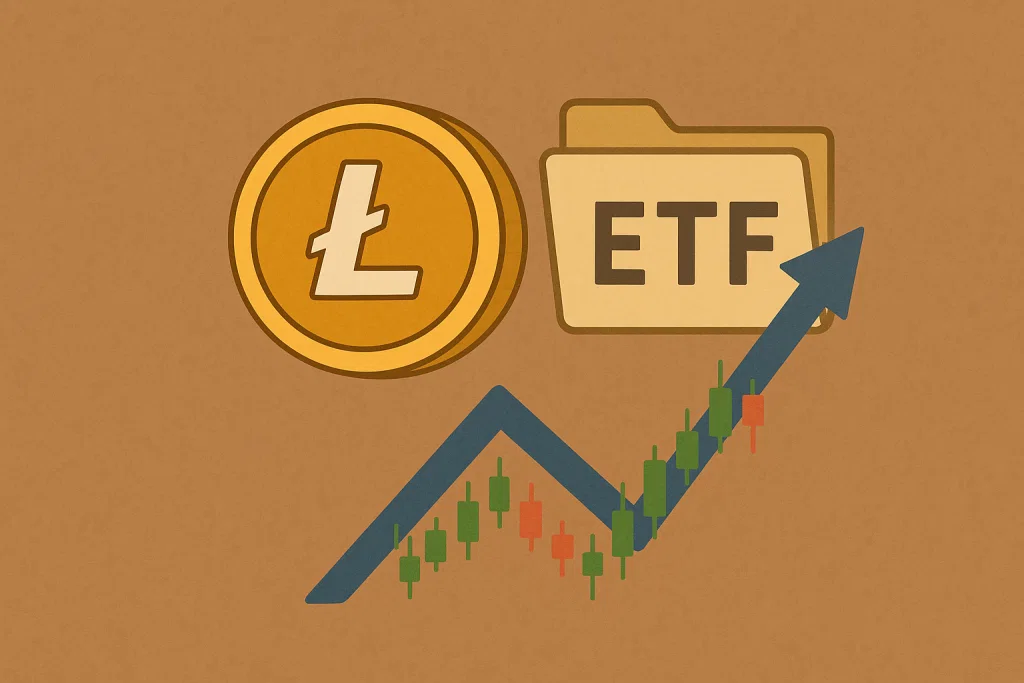
The year 2025 has brought a fresh wave of optimism to the cryptocurrency industry. Among the digital assets making headlines, Litecoin is capturing renewed attention due to growing speculation that it may soon be included in the next round of spot exchange traded funds in the United States. Much like Bitcoin and Ethereum before it, the possibility of a Litecoin ETF has ignited debates within the crypto community, intrigued investors, and fueled discussions about how such a move could alter the landscape for both institutional and retail participants.
The Road Toward A Litecoin ETF
The push for cryptocurrency exchange traded funds has been a gradual journey filled with regulatory hurdles, investor lobbying, and shifting market dynamics. Bitcoin ETFs received their long awaited approval earlier, setting a precedent for how regulators might treat other established digital assets. Ethereum ETFs soon followed, demonstrating that regulatory bodies were willing to broaden their acceptance beyond the largest cryptocurrency. Against this backdrop, Litecoin has emerged as a logical candidate for inclusion.
Industry insiders note that the timing could be particularly favorable. Regulatory agencies in the United States, especially the Securities and Exchange Commission, are under pressure to provide clarity and fairness across digital assets. With investor demand expanding and multiple financial institutions preparing ETF products, Litecoin’s candidacy is becoming harder to ignore. If approved, a Litecoin ETF would allow investors to gain exposure through traditional brokerage accounts without the need to directly hold or manage the cryptocurrency, lowering barriers to entry and attracting capital from institutional players who may have previously avoided the asset due to custodial and regulatory concerns.
Why Litecoin Stands Out Among Altcoins?
The question arises why Litecoin, among hundreds of altcoins, is drawing attention in the ETF conversation. The answer lies in its resilience, reputation, and technical foundation. Unlike many newer projects that carry significant risk or rely on experimental protocols, Litecoin has maintained over a decade of consistent operations. It is a proof of work coin with a capped supply of 84 million units, offering scarcity similar to Bitcoin but at a more accessible price point.
Litecoin is often referred to as the silver to Bitcoin’s gold, a narrative that continues to resonate with investors who want exposure to a reliable yet affordable cryptocurrency. Its network security is robust, supported by a wide distribution of miners, and it has a strong record of uptime and reliability. Furthermore, Litecoin has embraced technological upgrades such as the implementation of SegWit and the adoption of the Lightning Network, showcasing adaptability in keeping pace with innovation.
Institutional Interest And Market Implications
Should a Litecoin ETF gain approval in the United States, the market implications would be significant. Institutional investors who have long sought regulated exposure to cryptocurrencies beyond Bitcoin and Ethereum would have a new entry point. Pension funds, asset managers, and hedge funds could allocate portions of their portfolios to Litecoin through the familiar ETF vehicle, adding liquidity and credibility to the market.
The precedent set by Bitcoin ETFs shows how transformative such a development can be. Following Bitcoin ETF approvals, billions of dollars in institutional inflows entered the market, lifting prices and creating more sophisticated financial products. A similar trajectory for Litecoin could reinforce its position in the top ten cryptocurrencies and potentially drive its valuation upward. Increased trading volume on regulated exchanges would also reduce volatility, fostering a more mature market environment.
Price Predictions And Technical Outlook
Analysts are already revising their Litecoin forecasts in light of the ETF speculation. Currently trading around the $110 to $115 range, Litecoin has established solid support levels, with resistance seen between $125 and $140. A breakthrough above these resistance zones could propel the asset toward higher valuations, especially if institutional inflows materialize.
Some models suggest that in the short term, Litecoin could test the $150 to $180 range if ETF approval becomes imminent. Longer term forecasts are even more ambitious, projecting prices in the several hundreds by 2030 under bullish scenarios. While extreme predictions of Litecoin reaching $1000 have surfaced, such outcomes would depend on a combination of ETF approval, mainstream adoption, favorable macroeconomic conditions, and continued innovation in the cryptocurrency ecosystem.
Broader Impacts On The Crypto Market
The approval of a Litecoin ETF would extend beyond the asset itself and affect the broader digital currency landscape. Other altcoins may gain indirect legitimacy as regulators demonstrate a willingness to diversify beyond Bitcoin and Ethereum. Market psychology plays a crucial role in cryptocurrency adoption, and confidence in Litecoin could create a ripple effect that boosts sentiment across the board.
Additionally, Litecoin’s proof of work model offers a different value proposition compared to proof of stake networks. For investors concerned about decentralization and security, Litecoin presents itself as a complementary option within a diversified crypto portfolio. A regulated ETF would crystallize this narrative, encouraging more balanced investment strategies.
Potential Challenges And Criticisms
Despite the optimism, challenges remain. Regulatory bodies may still hesitate, citing concerns about market manipulation, liquidity, or investor protection. Litecoin’s trading volume, while strong, is not as high as Bitcoin or Ethereum, and skeptics argue that it may not yet be large enough to support a major ETF. Others question whether Litecoin’s narrative as digital silver still resonates in a market crowded with innovative projects offering smart contracts, decentralized finance, and tokenization.
Another consideration is environmental impact. Although Litecoin’s energy usage is far lower than Bitcoin’s, proof of work mining still faces scrutiny in an era of climate awareness. Regulators may weigh these concerns when evaluating ETF proposals, and public opinion could influence the decision making process.
The October 2025 Timeline
Much of the current excitement revolves around October 2025 as a potential decision point for ETF approvals. This timing coincides with ongoing reviews of multiple ETF applications filed by major financial institutions. While no guarantees can be made, analysts believe that the momentum is stronger than ever. If Litecoin is included in this wave of approvals, it could mark a historic turning point for the cryptocurrency.
Market participants are positioning themselves accordingly. Traders are watching price levels closely, while long term holders are holding with increased conviction. Financial media outlets are amplifying the discussion, ensuring that the spotlight remains firmly on Litecoin in the months ahead.
Long Term Investment Perspectives
For investors considering Litecoin as part of a diversified strategy, the prospect of an ETF reinforces its appeal. A regulated product would reduce barriers to entry, enhance liquidity, and legitimize Litecoin in the eyes of mainstream finance. Combined with its fundamental attributes of scarcity, security, and longevity, Litecoin stands as a compelling option for those seeking exposure beyond Bitcoin and Ethereum.
The narrative of digital silver, though debated, continues to resonate with a broad base of investors. In a world where gold and silver have coexisted for centuries as stores of value, the parallel between Bitcoin and Litecoin is not easily dismissed. If institutional players embrace this narrative, Litecoin could play a central role in the next chapter of cryptocurrency adoption.
Conclusion
Litecoin’s journey toward ETF approval symbolizes the broader evolution of the cryptocurrency market. What was once a niche project launched in 2011 has matured into a serious contender for institutional investment. The speculation surrounding October 2025 reflects growing confidence that regulators are ready to expand beyond the two largest cryptocurrencies and recognize the value of long standing alternatives like Litecoin.
While challenges remain, the potential rewards are substantial. An approved Litecoin ETF would open the doors to billions in institutional inflows, expand accessibility for retail investors, and cement Litecoin’s role as a foundational asset in the digital economy. Whether viewed as digital silver, a payment friendly cryptocurrency, or a secure proof of work network, Litecoin is poised to capture a larger share of attention in the years ahead.