Introduction
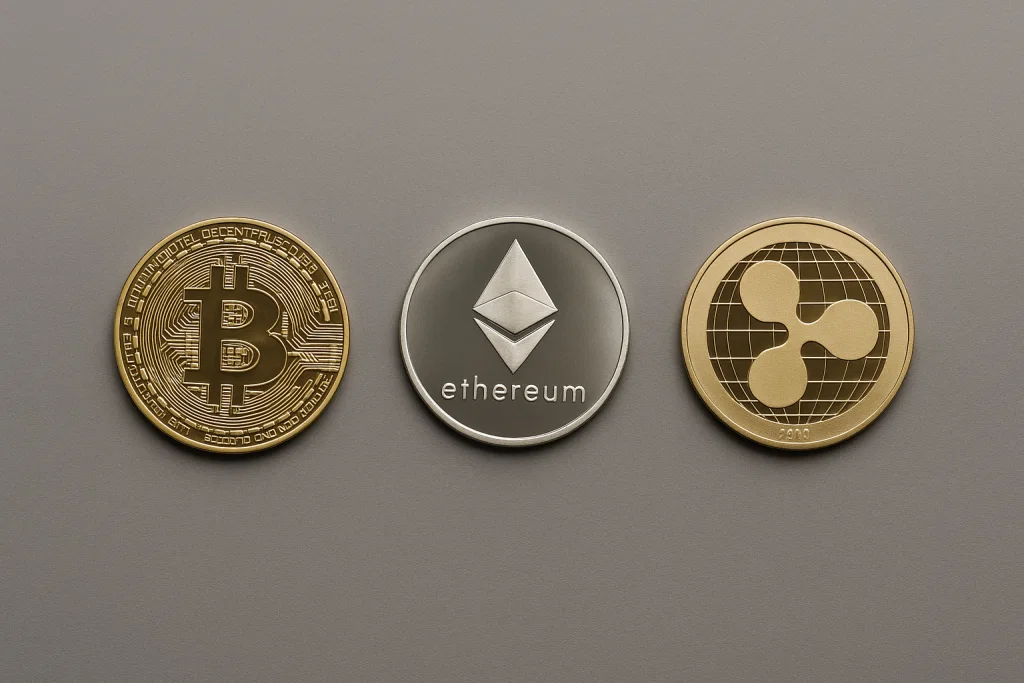
The global cryptocurrency market once again faced turbulence as Bitcoin, Ethereum, XRP, Solana, and Dogecoin all registered declines following renewed doubts over potential U.S. Federal Reserve interest rate cuts. The sharp pullback highlighted the fragile balance between investor optimism, political interference, and central bank caution. In August 2025, Bitcoin slid to nearly 110,000 dollars, marking a significant reversal from its recent highs above 124,000 dollars earlier in the month. Ethereum dropped by more than five percent, while XRP, Solana, and Dogecoin all followed a downward trajectory. This collective downturn emphasized how sensitive the crypto market remains to broader macroeconomic signals.
Interest Rates And Their Impact On Crypto Valuations
Cryptocurrencies like Bitcoin and Ethereum have historically thrived in environments of low interest rates. When borrowing is cheap, and yields on traditional fixed-income investments such as bonds are less attractive, speculative assets gain greater appeal. Additionally, lower rates often put pressure on the U.S. dollar, which further enhances the value proposition of decentralized alternatives like Bitcoin.
Yet, as hopes for aggressive rate cuts diminished, traders were forced to reconsider their positioning. The Federal Reserve’s cautious stance and reluctance to commit to larger rate reductions created unease. The underlying principle is simple—if interest rates remain higher for longer, holding cash and bonds becomes more rewarding, while volatile assets like cryptocurrencies lose their shine.
Federal Reserve Dynamics And Political Pressure
The uncertainty did not arise solely from economic indicators but also from political tensions. Recent months saw increasing political interference in monetary policy, raising questions about the independence of the Federal Reserve. Statements from high-ranking political figures, including direct pressure from the administration, cast doubt on how much freedom the Fed will have in steering policy strictly on economic grounds.
Federal Reserve Governor Christopher Waller addressed these concerns by signaling that while he supports a modest 25-basis-point cut in September, he does not see justification for a more aggressive 50-basis-point adjustment. This balanced yet cautious message dampened hopes among traders who had bet on a deeper round of easing.
Meanwhile, legal challenges and political maneuvering surrounding other Fed officials further complicated the outlook. Market participants were left to wonder whether monetary policy would remain guided by economic fundamentals or if it would increasingly be swayed by political agendas.
The Clash Between Bullish Optimism And Market Reality
Despite the growing caution, optimistic voices within the cryptocurrency space continued to make bold predictions. At a recent financial gathering in Asia, high-profile commentary suggested that Bitcoin would inevitably reach one million dollars. Such sweeping claims, however, clashed with the prevailing mood of investors, who were grappling with short-term price corrections and macroeconomic uncertainty.
This divergence between long-term bullish narratives and short-term bearish realities reflects the unique psychology of the crypto sector. While digital assets have a history of defying expectations and delivering dramatic rallies, their path is rarely straightforward. The juxtaposition of speculative optimism against fundamental macro pressures creates an atmosphere of tension and volatility.
Altcoin Performance Mirrors Bitcoin’s Struggles
The decline was not limited to Bitcoin. Ethereum suffered one of the steepest falls, sliding more than five percent in a single day. XRP followed closely with losses above four percent, while Solana and Dogecoin shed around three to four percent each. This broad sell-off demonstrated that altcoins, despite their individual ecosystems and use cases, continue to mirror Bitcoin’s trajectory during periods of heightened market stress.
For Ethereum, the sell-off came at a time when developers and investors were looking forward to continued scaling upgrades. XRP, on the other hand, had been riding a wave of optimism due to legal victories earlier in the year. Solana, with its expanding network activity, and Dogecoin, bolstered by its community-driven culture, all saw gains erased as investors exited riskier positions.
The synchronous decline across the board underscores a critical truth—macroeconomic forces can often override project-specific developments.
Investor Sentiment And The Fragility Of The Rally
Earlier in August, cryptocurrencies had staged an impressive rally, buoyed by expectations that the Federal Reserve would pursue aggressive easing. Bitcoin surged above 124,000 dollars, and altcoins followed in lockstep. That momentum has since evaporated. The market now appears fragile, with every new piece of data or Fed commentary serving as a catalyst for sharp moves.
This fragility is rooted in the fact that much of the recent rally was speculative. Traders piled into positions expecting rate cuts, and when that narrative weakened, so did the price support. Unlike traditional equities, cryptocurrencies lack consistent earnings or dividends, making them more reliant on narratives and momentum to sustain price appreciation.
The Weight Of Monetary Policy On Crypto
The Appeal of Lower Rates
When interest rates fall, speculative assets like cryptocurrencies typically benefit. Cheaper borrowing costs make leverage more attractive, while lower yields on safe assets encourage investors to chase returns in riskier sectors.
The Risk of High Rates
Conversely, when rate cuts become uncertain or delayed, the attractiveness of crypto diminishes. Investors rotate back into assets that offer guaranteed returns, such as Treasury bonds. The sell-off in late August reflected this shift in sentiment, as higher-for-longer rates seemed increasingly likely.
Political Overtones Add Uncertainty
A particularly concerning development for market participants has been the visible attempt by political leaders to influence monetary policy decisions. While the Federal Reserve is designed to operate independently, any sign of political interference undermines credibility and injects volatility into markets. For cryptocurrencies, which already sit at the intersection of speculation and distrust of central authority, such developments create mixed reactions.
On one hand, political interference can reinforce the crypto community’s narrative that decentralized systems are needed to protect against centralized manipulation. On the other hand, instability in policy decision-making creates unpredictability that drives cautious investors away.
Market Psychology in Transition
The crypto market thrives on stories—be it the dream of Bitcoin at one million dollars or the rise of Ethereum as the world’s decentralized computer. Yet, when these stories collide with hard economic realities such as stubborn inflation, cautious Fed policy, and political meddling, sentiment begins to fracture.
Traders who had been banking on quick profits from a bullish rate narrative are now reconsidering their exposure. Long-term holders remain confident, but the short-term volatility has made speculative positions much riskier.
What Lies Ahead For Crypto Markets?
Fed Communications
The Federal Reserve’s next steps will be decisive. If officials adopt a more dovish stance in the coming weeks, cryptocurrencies could regain momentum. Conversely, continued caution or hawkish signals may trigger further sell-offs.
Economic Data Trends
Key data releases on inflation and employment will shape the Fed’s September decision. A softening in inflation would support rate cuts, while persistent strength in economic activity could push cuts further out.
Investor Positioning
Market positioning will also matter. If traders unwind leveraged bets en masse, volatility could intensify. On the flip side, institutional adoption trends and growing infrastructure around Bitcoin and Ethereum could provide a stabilizing influence.
Conclusion
The recent decline in Bitcoin, Ethereum, XRP, Solana, and Dogecoin highlights the ongoing vulnerability of cryptocurrencies to macroeconomic forces and political uncertainty. While the early part of August was characterized by optimism and bullish momentum, the narrative has quickly shifted toward caution. The Fed’s reluctance to commit to aggressive easing, coupled with political interference, has created a cloud of uncertainty that weighs heavily on digital assets.
At the same time, bold long-term predictions continue to capture attention. The belief in Bitcoin as a million-dollar asset reflects the enduring optimism of the crypto community. Yet, in the short term, traders must contend with volatility, shifting policy signals, and fragile investor sentiment.