Introduction
Core Lithium, an Australian lithium miner, has made a big announcement: it has made a Final Investment Decision to restart its Finniss lithium project near Darwin in the Northern Territory. This is a big step forward for the company and its operations. After years of market instability that caused lithium prices to drop and a time when mining at the facility was put on hold for care and maintenance, the decision was made. The restart plan is a big financial investment backed by a strategic group of institutional and industry investors. Its goal is to set the operation up for long-term success in a rebounding global lithium market. This article goes into great detail about the reasons for the FID, the financial engineering that made the funding possible, the operational strategy (including future hiring, shipping timetables, and the bigger market backdrop that supports the decision).
A Little Bit About The Finniss Lithium Project
The Finniss Lithium Project is about 88 kilometers southwest of Darwin Port in the Northern Territory. It is a hard rock lithium operation that focuses on getting spodumene concentrate, a high-value lithium-bearing material that is used to make battery-grade chemicals that go into electric vehicle battery supply chains. The project was first found in 2016 and quickly moved through the feasibility and development stages. The first commercial exports started in 2023, making it Australia’s first lithium operation outside of Western Australia. There are other deposits in the mine, such as Grants Carlton Sandras Hang Gong SW and BP33, that all add to the total mineral resource. Core Lithium started making money and exporting spodumene concentrate. They signed some big early offtake deals, including long-term supplies with big battery consumers. But the mine had a rough patch in early 2024 when the price of lithium around the world fell because there was too much of it, especially from Chinese manufacturers. This flooded the market and cut into the profits of many smaller producers. Core Lithium made the hard decision to stop operations and put the mine on care and maintenance while it looked at its long-term operational and financial prospects again.
The Lithium Market’s Ups And Downs And Price Recovery
Lithium markets were very unstable between 2023 and 2025. After years of high demand caused by rapid expansion in the production of electric vehicles and battery storage systems, global supply chains briefly outpaced demand, causing prices to drop significantly. Core Lithium and many other producers felt the effects strongly, which forced the whole sector to make changes to its production and strategy. Even though the market was down, Core Lithium and other miners spent time on optimization studies, changing mine plans, and changing cost models that would lead to lower-cost, longer-lasting operations when the markets rebounded. By the middle of 2025, lithium prices started to rise again as supply became tighter and demand growth picked up again. This was due to new commitments to electric vehicles, increased battery production capacity around the world, and the need to move to cleaner energy sources. This turnaround in the fundamentals of pricing gave investment partners confidence that the earlier negative outlook had given way to a more stable price environment that would allow projects to start up again.
Strategic Funding And Financial Framework
Core Lithium was able to make a Final Investment Decision because it was able to get a strong and varied funding package that reduces the risk of restarting and gives the company long-term capital to keep running. A group of strategic partners lead by the well-known global miner Glencore is putting money into the deal, along with money from InfraVia and Nebari Natural Resources. The strategic package brings in about AUD 170 million, which, along with a concurrent AUD 120 million equity issue, completes the fully funded structure for the restart. There are also other types of debt and convertible securities that are set up to balance risk with performance goals that come with rewards and long-term wealth creation. The fact that these major partners are involved shows that people believe in the project’s potential and the long-term future of lithium consumption. Putting additional shares into institutions shows that the market is confident and links long-term investors with the mine’s operational timeframe and overall strategy for its resurrection.
At first, the news about raising funds caused the financial markets to be unstable, and some Core Lithium shares fell after the release. This answer shows how sensitive investors are to equity dilution and how they see risk in the larger market. The entire nature of the finance, on the other hand, shows strong support that puts the company in a good position to begin production quickly while still keeping its financial options open.
Plans For Operations And The Strategy For Mine Development
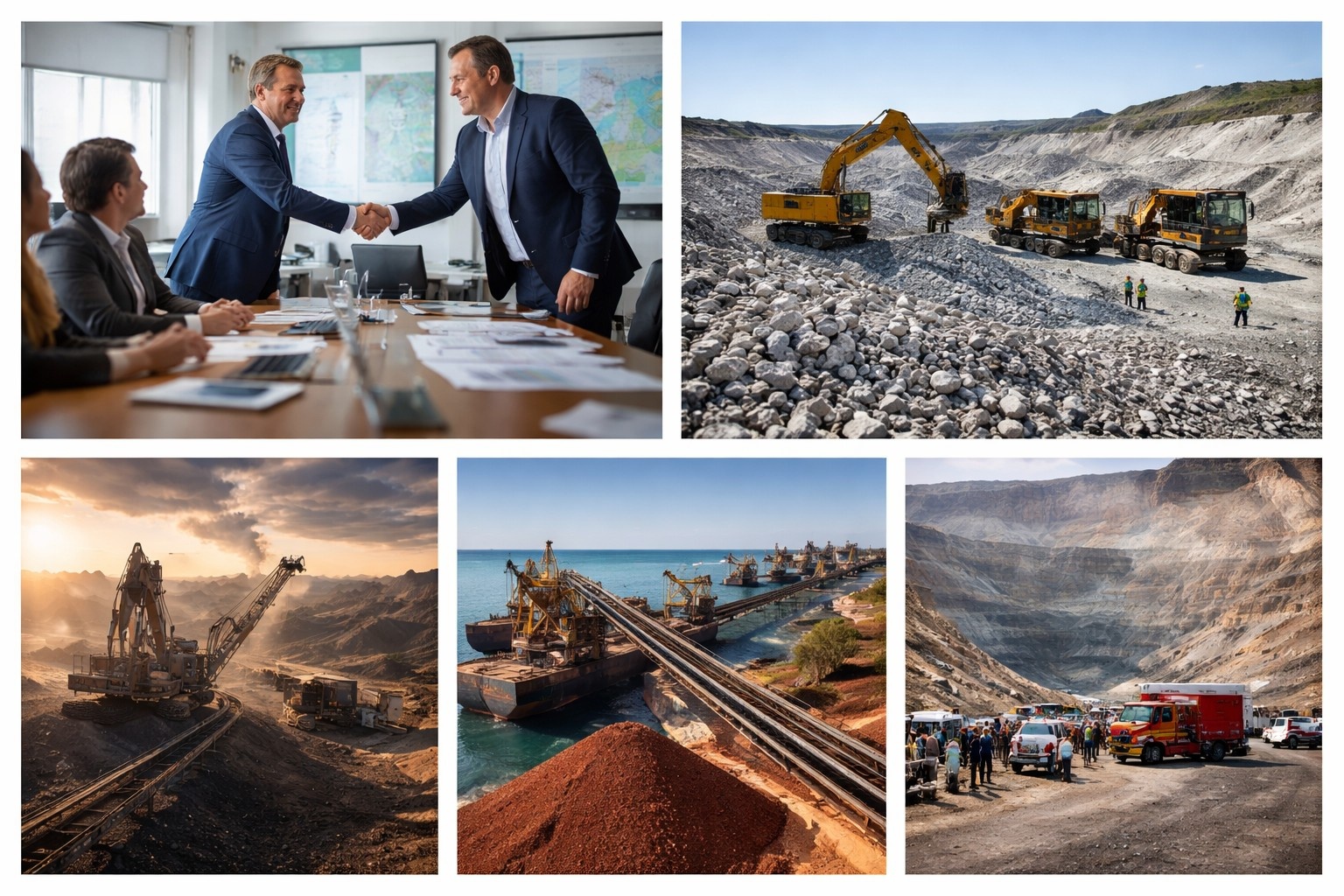
Core Lithium is moving quickly to start operations now that it has received the Final Investment Decision. The restart plan uses a phased approach that brings together different parts of the mine and takes into account what was learned during the first operational period. Mining teams will move to the site, where open pit mining will start at the Grants deposit. After that, operations will commence on the BP33 underground mine. This phased strategy is an attempt to find a compromise between short-term production increases and long-term subterranean development that will keep the mine open for longer. Core wants to start shipping spodumene concentrate as early as the September quarter of 2026 by using existing infrastructure and improving its facilities. The processing plant and the logistics that go with it near Darwin give the company a strategic edge in reaching export markets, especially in Asia, where the demand for lithium raw materials is still high. Rewatering and dewatering of the open pit are in progress, as are preparations to make sure the plant is ready and meets safety and environmental standards. Recruitment for the upcoming operations is also going on, and it is expected that roughly two hundred new jobs will be created to help the workers on site.
Improvements In Technology And Engineering
The work done to improve mine design engineering procedures and cost structures has been a key part of the restart plan. In the last eighteen months, there have been in-depth studies focused on changing mining methods and making processing more efficient. The goal of these studies is to lower the amount of capital needed and the continuous operating costs compared to the previous production cycle. Core Lithium’s management said that this diligence was a key reason why the company was able to promise to start up operations again with a strong focus on being competitive on price. The use of staged ramp up and the incorporation of underground mining techniques show a better grasp of how to get the most value out of resources while keeping risks low. The technical work also includes making processing throughput better and recovery rates higher so that the operation can compete well in a global market where cost per tonne is still a major factor in profitability.
Environmental And Regulatory Factors
To restart a mine in Australia, you have to follow a lot of rules, such as getting permission from the community, getting environmental permits, and getting authorization to utilize the site. Core Lithium has worked closely with regulators and other interested parties to make sure that its plan to restart operations meets environmental criteria that safeguard local ecosystems and keep the property intact. As part of this engagement, existing approvals will be extended to cover deeper underground mining operations at BP33 and changes to the way the processing works. This procedure of asking for input helps the project go smoothly into the next phase and shows that the company is committed to appropriate mining operations. Core Lithium’s environmental management plan also stresses the importance of water management, dust control, and rehabilitation efforts to lessen the effects of repeated mining activity.
Effects On The Community And The Workforce
The Northern Territory economy and local residents will benefit from the reactivation of the Finniss Lithium Project. As the mine goes back to full operations, it will produce a lot of jobs, which will help workers in the area and also help service providers and suppliers in the vicinity. Core Lithium’s plan for its personnel includes hiring drives and training initiatives that are meant to bring in local talent and help improve the workforce in mining-related fields. The company’s work with indigenous and traditional land custodians is also an important part of its social license to operate, making sure that cultural heritage is preserved and honored. People who watch the market think that these social and community programs are very important for the long-term success of the project, especially since the mining industry is starting to link profits with ESG environmental, social, and governance requirements.
Effects On The Industry As A Whole
Core Lithium’s choice to restart the Finniss project comes at a time when the lithium sector as a whole is starting to get better. A lot of miners are changing their plans to focus on projects that have lower costs and longer mine lifetimes. Core’s decision shows that more and more people in the sector are sure that demand for lithium in the electric vehicle battery supply chain will keep expanding. This restart could be a sign for other producers who are thinking about starting up again or building new factories that were put on hold during the price drop. The fact that big companies like Glencore are involved also supports the idea that important minerals like lithium are key to long-term plans for changing energy sources and making supply chains more diverse around the world. The lithium market is always changing, which makes it even more important for miners to be flexible and use their capital wisely as they deal with changes in demand, prices, and geopolitical factors that affect global trade.
Future Goals And Outlook
Core Lithium is focused on a few important goals as it moves from being inactive to producing lithium. Some of these are finishing up the work that has to be done on site, getting crews, equipment, and materials ready, and starting extraction activities at the Grants open pit. After this, the ramp-up phase will probably get a lot of attention from the market because the first production volumes will show that the operation is working. Core hopes to firmly reestablish itself as a supplier of essential minerals to a global client base when the first shipments of spodumene are expected to arrive in the third quarter of 2026. In addition to meeting short-term production goals, exploration projects near the Blackbeard deposit and other area targets could lead to new prospects that would expand the life and scope of the Finniss enterprise. These exploration efforts, along with an established processing platform, lay the groundwork for long-term growth.
Conclusion
Core Lithium’s success in getting a Final Investment Decision to restart the Finniss Lithium Project is a big step forward for the firm and the Australian lithium sector as a whole. Core has set the stage for a successful return to operations by carefully optimizing engineering, getting strategic funding, and getting stakeholders involved. The successful restart will not only increase the supply of a vital mineral needed for the global energy transition, but it will also boost the regional economy and provide an example for other projects going through similar market cycles. The narrative of the Finniss lithium project will continue to be important for both industry watchers and investors as production starts up again and markets change.