
Introduction
Crypto margin trading has become one of the most talked about strategies in the world of digital assets. It is often described as a double edged sword because it offers the potential for magnified gains while also exposing traders to the possibility of severe losses. At its core, margin trading allows traders to borrow funds from an exchange or broker in order to take positions larger than their own capital would otherwise permit. This borrowed capital multiplies both the profit potential and the risks. As the cryptocurrency market is known for its volatility margin trading can be exhilarating for the skilled and devastating for the unprepared. To understand whether this strategy is right for you it is important to dive into its mechanics, its opportunities, its dangers and the discipline required to succeed.
Understanding The Basics Of Margin Trading
Margin trading works by allowing you to deposit a certain amount of money which is referred to as margin and then borrow additional funds based on that margin. For example if you deposit one thousand dollars and use five times leverage you are able to open a position worth five thousand dollars. This means that even a small percentage movement in the market will result in a much larger gain or loss compared to trading without leverage.
Leverage is usually expressed as a ratio such as two times five times or even one hundred times depending on the platform. While higher leverage may seem attractive it drastically reduces the room for error. A small adverse move in price can quickly lead to liquidation where the exchange closes your position automatically to prevent further losses.
Long And Short Positions
Margin trading opens up two different paths for traders. You can go long which means you are betting that the price of a cryptocurrency will rise. By using leverage in a long position your gains multiply if the market moves upward. Alternatively you can go short which means you are betting the price will fall. This is done by borrowing the cryptocurrency and selling it with the expectation of buying it back at a lower price. Shorting is a powerful tool that allows traders to profit in declining markets, something that spot trading cannot provide.
Both long and short positions provide flexibility and opportunity but they also demand a deep understanding of market direction. An incorrect call especially when using high leverage can wipe out a trading account much faster than most beginners realize.
Volatility And The Double Edged Nature Of Leverage
Cryptocurrency markets are famous for their volatility. Daily swings of five to twenty percent are not uncommon. For margin traders this volatility can either be a blessing or a curse. When the market moves in your favor a leveraged position can yield extraordinary returns in a very short period. However when the market moves against you even slightly the losses are equally amplified.
This makes margin trading fundamentally different from spot trading. With spot trading your maximum loss is usually limited to your initial investment. With margin trading your losses can extend beyond your initial capital if not managed correctly. This is why exchanges often issue margin calls or automatically liquidate positions to prevent traders from owing more than they deposited.
Risk Management And Smart Leverage Use
The single most important skill in margin trading is risk management. Successful traders approach margin trading with discipline rather than emotion. They choose moderate levels of leverage typically two or three times rather than the extreme ratios offered by some platforms. Using lower leverage provides more breathing room and reduces the risk of liquidation from normal market fluctuations.
Stop loss orders are another essential risk management tool. By setting a stop loss a trader ensures that a losing position will close automatically once it reaches a certain loss level. This prevents catastrophic drawdowns and removes emotion from the decision making process. Regularly monitoring positions and understanding liquidation thresholds is also critical. Margin trading requires active participation and cannot be treated as a passive investment.
How Institutional Traders Use Margin?
Professional and institutional traders approach margin trading very differently from retail traders. Institutions follow strict risk frameworks to ensure long term survival in the market. They often risk only a small fraction of their total capital on any single trade even when leveraging heavily. Their strategies emphasize diversification across multiple assets and techniques such as momentum trading mean reversion and hedging.
Another hallmark of institutional trading is strict adherence to stop loss orders. These are determined by volatility based models rather than emotions. Institutions also adjust their leverage based on market conditions. During periods of high volatility leverage is reduced or avoided entirely while in calmer markets it may be increased slightly.
Institutions also employ structured risk controls such as setting daily loss limits, calculating value at risk and using trailing stops. Trade journaling is another practice where every decision is recorded and analyzed to refine strategies over time. This level of discipline is what separates professional traders from those who gamble with leverage.
Choosing The Right Platform
Not all cryptocurrency exchanges are equally suited for margin trading. When selecting a platform it is important to evaluate the features they provide for risk management. Look for exchanges that allow adjustable leverage options so you can scale up or down depending on your confidence level and market conditions.
Margin call alerts and protections against forced liquidation are also valuable. Platforms that provide tools for setting stop loss and taking profit orders at the point of entry help traders automate discipline. Additionally support for both cross margin and isolated margin systems is important. Cross margin shares collateral across positions while isolated margin limits risk to a single trade. Each has its own advantages and should be chosen depending on the strategy.
The best platforms are transparent about funding rates, provide clear reporting on margin requirements and have strong liquidity to ensure smooth execution of trades. Choosing the right platform is as important as having the right strategy.
Discipline Over Leverage
A common mistake among beginners is treating leverage itself as a strategy. In reality leverage is only a tool. The real strategy lies in how it is used. Professional traders understand that leverage should be employed conservatively to enhance capital efficiency rather than as a shortcut to extraordinary returns.
Discipline means setting clear stop loss levels before opening a trade. It also means limiting exposure so that no single trade can cause irreparable damage to an account. Many professionals follow the rule of risking no more than one to three percent of their total capital on a single position. This ensures longevity in the market and prevents emotions from driving reckless decisions.
Is Margin Trading Right For You?
Margin trading is not suitable for every trader. It can be considered if you already have a proven trading system if you are capable of monitoring the markets in real time and if you have the emotional discipline to handle large swings in profit and loss. Margin trading rewards patience, precision and strong mental control.
However margin trading should be avoided if you lack familiarity with liquidation risks or if you often trade based on impulse rather than analysis. It is also dangerous for those who increase their leverage after a losing streak in an attempt to recover losses quickly. If you do not consistently analyze and review your trades, margin trading will likely work against you rather than in your favor.
Conclusion
Crypto margin trading is one of the most powerful tools available to traders but it is also one of the riskiest. It magnifies opportunities but also magnifies mistakes. To succeed in this arena traders must adopt the mindset of professionals with an emphasis on risk management platform selection and emotional discipline.
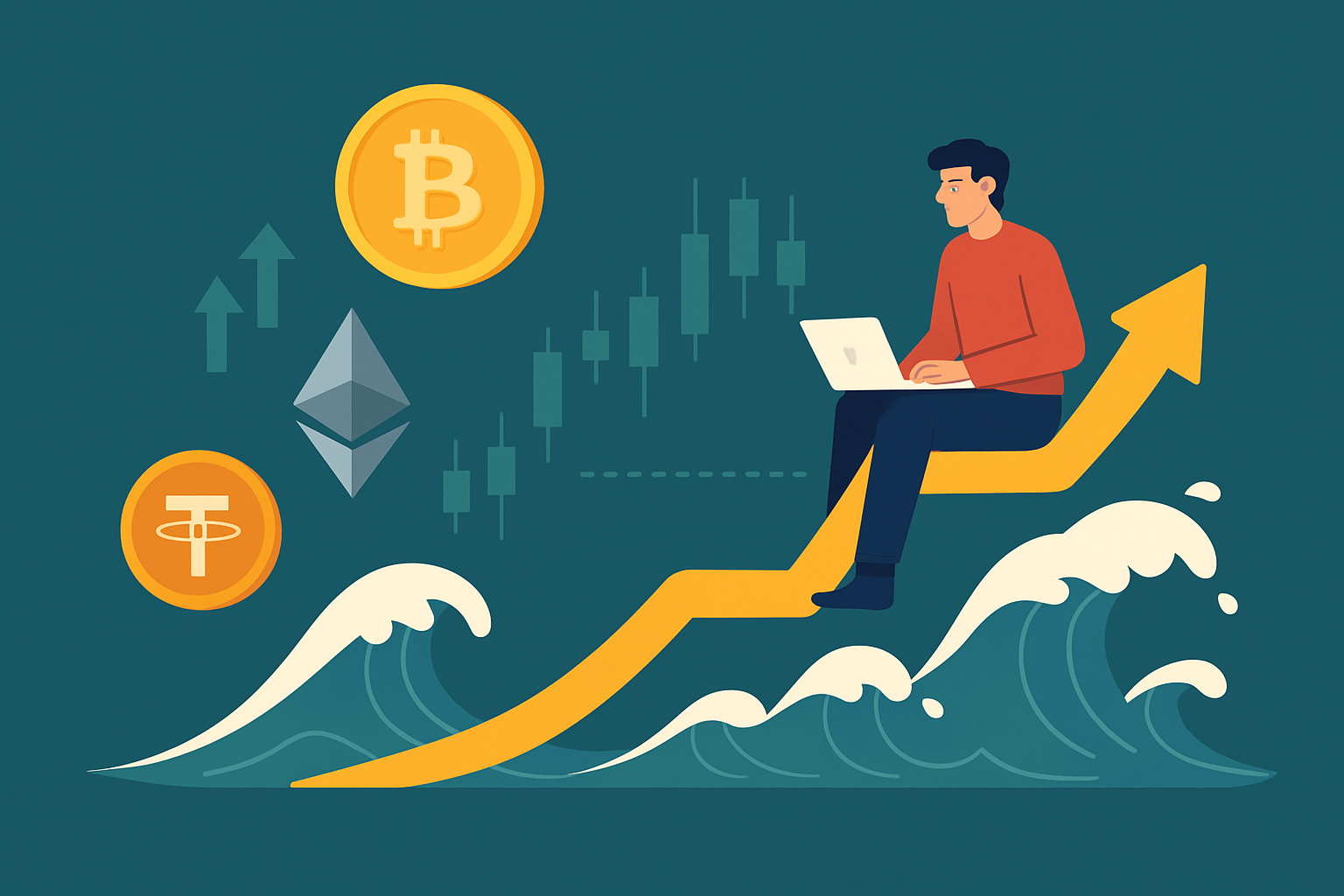
For beginners margin trading should be approached cautiously with low leverage and strict stop loss strategies. For experienced traders it can serve as a means to optimize capital and diversify strategies. Ultimately the key to riding the leverage wave lies not in chasing huge gains but in surviving long enough to compound smaller consistent victories.